
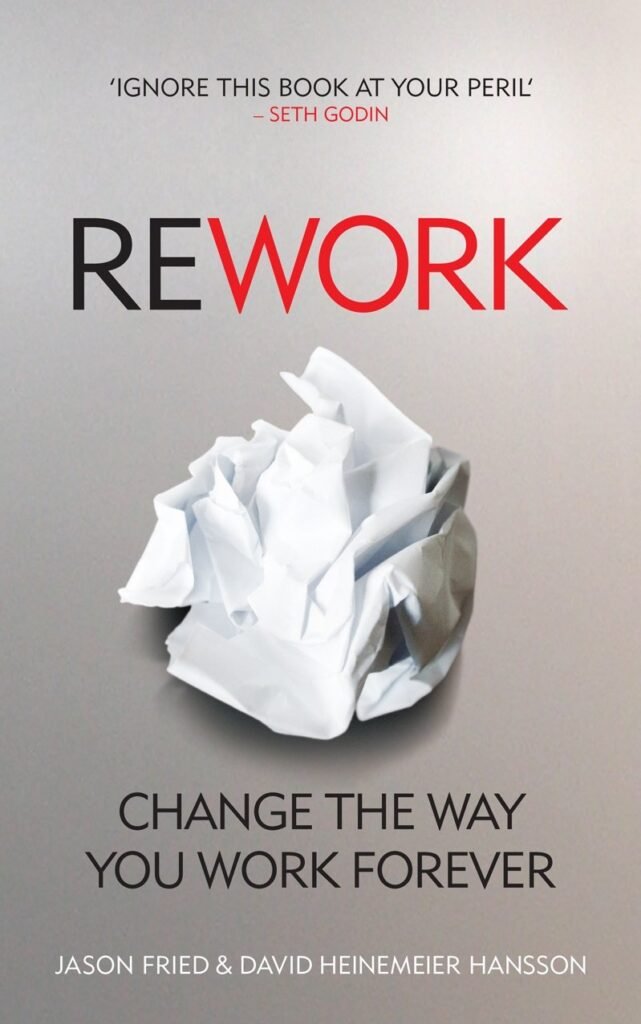
Why Rework Matters and Who It’s For
When you hear “business book,” you might imagine jargon-heavy guides that glorify endless hustle, corporate politics, and expensive MBA concepts. Rework by David Hansson and Jason Fried (founders of Basecamp) is nothing like that.
Instead, Rework is refreshingly blunt, practical, and designed for anyone who wants to start, grow, or reinvent their business—without burning out or following outdated rules.
This book matters for:
-
Entrepreneurs tired of hearing “raise money first.”
-
Startup founders struggling with too much advice and too little action.
-
Small business owners who want to stay lean and profitable.
-
Professionals who want to improve productivity and live long, balanced lives.
At its heart, Rework is about working smarter, not harder—simplifying the process, avoiding excuses, and building meaningful businesses.
Key Concepts from Rework (With Explanations and Examples)
Here are the core principles of Rework explained with practical insights and real-life applications.
1. Getting Started: Be a Starter, Not Just an Entrepreneur
Hansson and Fried argue that the word entrepreneur is overcomplicated. You don’t need to be a visionary with a 100-page plan—you just need to be a starter.
👉 Lesson: Start with solving one real problem in your life or work. Build a product that makes a small but meaningful difference.
Real-life example:
Brian Chesky and Joe Gebbia, founders of Airbnb, didn’t set out with a billion-dollar plan. They simply wanted to pay their rent in San Francisco and started renting out air mattresses. That small solution turned into one of the world’s biggest hospitality companies.
2. Mission Statement: Keep It Realistic and Aligned
Grand mission statements often become hollow. Rework suggests being practical: your mission should guide your daily actions, not just decorate your website.
👉 Lesson: Avoid chasing external funding unless necessary—investors may control your business more than you do. Treat your project like a real business from day one, not a “startup experiment.”
3. Progress Comes from Constraints
Constraints—time, money, resources—force you to get creative. Instead of waiting until you “have enough,” use your limitations as fuel.
👉 Lesson: Deadlines, small budgets, and lean teams sharpen focus and innovation.
Real-life example:
WhatsApp started with a small team and limited funding. Their resource constraints led to a laser focus on building a simple, fast, and reliable messaging app—which later scaled to over 2 billion users.
4. Momentum Matters
Momentum fuels motivation. Break your projects into smaller chunks, finish them quickly, and move on.
👉 Practical tip: Try the “12 weeks = 12 projects” method. Focus on one meaningful task per week instead of juggling endless to-dos.
5. Competition: Don’t Copy, Simplify Instead
Many businesses waste time copying competitors. Rework encourages simplification—make things easier for customers rather than competing on size or complexity.
👉 Lesson: Copycats are always one step behind. Originality + simplicity wins loyalty.
6. Promotion: Be Real, Share Struggles
Customers trust authenticity more than polished perfection. Share the struggles, setbacks, and lessons along your journey.
👉 Lesson: Give your audience a taste of your product (like free trials or freemium services) and let them grow with you.
7. Hiring: Do Less, Hire Later
Before hiring, try the job yourself. If you must hire, look for people with strong writing skills, flexibility, and real passion.
👉 Lesson: Don’t overhire. Too many people slow down decision-making. Hire remote talent when needed, and always test candidates with a small project first.
8. Embrace Mistakes and Apologize Quickly
Mistakes are inevitable. The key is to admit them honestly, fix them quickly, and move forward. Customers forgive transparency.
9. Customers Are King
Customer issues should be solved as soon as possible. Ignoring small problems makes them grow into bigger issues.
👉 Lesson: Customer service isn’t just support—it’s a marketing advantage.
10. Culture: Shape It Through Actions, Not Words
Culture isn’t created by slogans—it’s built through consistent behaviors. Respect employees, avoid micromanagement, and promote healthy work-life balance.
👉 Lesson: Overworked staff don’t create better businesses. Productivity comes from clarity, not exhaustion.
Additional Themes from Rework
-
The New Normal: Technology now lets one person do the work of five. Laptops, software, and automation lower barriers to entry.
-
Failure vs. Success: Studies show people who succeed once are more likely to succeed again—not because of failure, but because they’ve learned execution.
-
Workaholics Are Overrated: Being busy doesn’t equal being productive. Real heroes are the ones who find faster, smarter ways to get things done.
-
Small is Beautiful: There’s nothing wrong with staying small. You don’t need to chase “unicorn” status to create meaningful impact.
Step-by-Step Action Plan to Apply Rework
Here’s how you can start applying Rework lessons today:
-
Identify one problem in your life or work and create a solution.
-
Write a one-sentence mission statement you can live by daily.
-
Set constraints (budget, timeline) to force creativity.
-
Break work into small projects and celebrate progress weekly.
-
Stop comparing yourself to competitors. Simplify instead.
-
Promote authentically by sharing real struggles and wins.
-
Delay hiring until the role truly demands it.
-
Admit mistakes fast and turn them into learning moments.
-
Listen to customers—fix small issues immediately.
-
Foster culture by practicing respect, balance, and trust daily.
10 Takeaways from Rework
-
Anyone can start a business—stop waiting for perfect conditions.
-
Investors should be a last resort; independence matters.
-
Constraints breed creativity and innovation.
-
Small progress builds momentum faster than giant leaps.
-
Simplicity beats complexity in product and competition.
-
Authentic promotion attracts loyal customers.
-
Hire slow, fire fast—quality over quantity.
-
Mistakes don’t kill businesses—silence and arrogance do.
-
Culture is shaped by everyday actions, not posters on the wall.
-
Success comes from execution, not endless planning.
Lessons Learned
The biggest lesson from Rework is that business doesn’t have to be complicated. You don’t need an MBA, massive funding, or a 100-hour workweek. What you need is clarity, focus, and the courage to start small and grow steadily.
Call to Action
Are you ready to stop overthinking and start building? The lessons from Rework are simple but powerful. Apply just one principle today—whether it’s simplifying your project, cutting unnecessary meetings, or launching that small idea you’ve been sitting on.
📚 Inspired? Grab a copy of Rework by David Hansson and Jason Fried and put its principles into action.
🌐 Visit: wwmycashflowhub.com
📞 Contact: 885-511869
Disclaimer:
This blog post is for educational purposes and summarizes key concepts from Rework by David Hansson and Jason Fried. It is not an official reproduction of the book.