
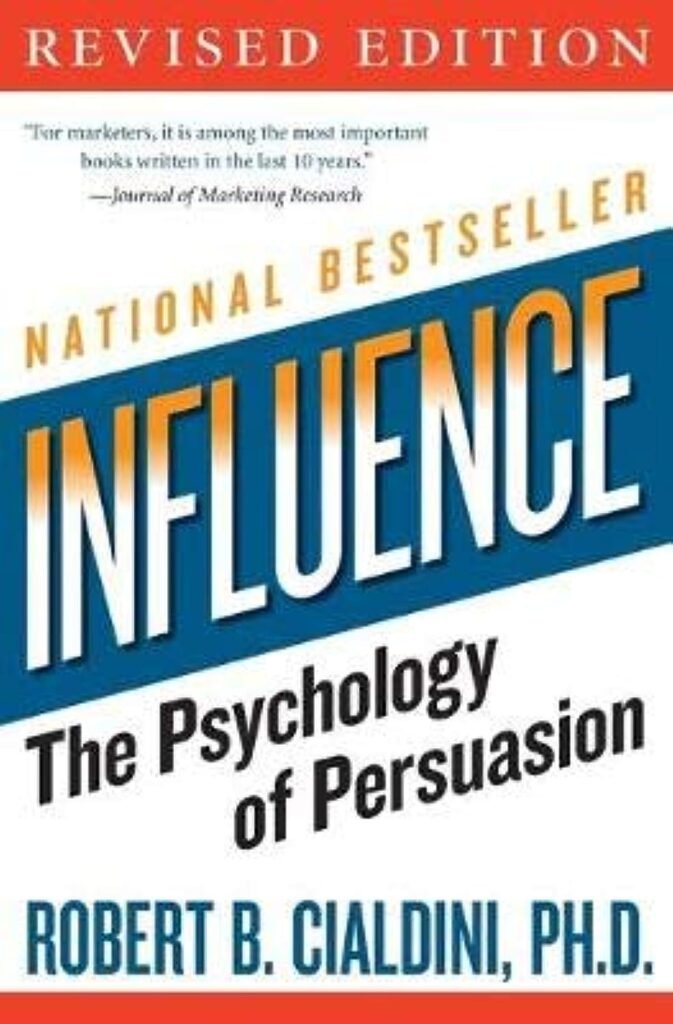
Why This Book Matters
If you’ve ever wondered why you say “yes” to a salesman, why you’re swayed by online reviews, or why a “limited-time offer” feels impossible to resist — then Influence: The Psychology of Persuasion by Robert Cialdini is your roadmap.
This classic book is not just for marketers. It’s a bible for entrepreneurs, sales professionals, startup founders, and anyone interested in self-growth and personal development.
Cialdini unpacks the psychology of persuasion through years of research, offering 8 powerful triggers that drive human behavior. These aren’t manipulative tricks — they’re timeless principles that, when used ethically, can build trust, influence decisions, and create massive impact.
The Principles of Influence – Explained with Stories & Examples
Let’s dive deep into each chapter and principle, with relatable real-world stories.
1. Weapons of Influence – The Power of Shortcuts
Humans rely on mental shortcuts to make decisions quickly. For example, we often assume: “Expensive = High Quality.”
📖 Cialdini shares the story of the mother turkey who responds to the “cheep-cheep” sound of her chicks — even if it comes from another bird. We too are wired with triggers.
💡 Real Example: A jewelry store in Arizona had turquoise jewelry that wasn’t selling. The owner accidentally doubled the price instead of halving it — and suddenly it sold out. Why? Customers equated higher price with higher value.
Lesson: Be mindful of shortcuts — both as a consumer and entrepreneur. Price, packaging, and presentation act as signals.
2. Reciprocation – The Rule of Give and Take
When someone gives us something, we feel obligated to return the favor.
📖 Example: In the 1980s, Ethiopia sent aid to Mexico after an earthquake, even though Ethiopia was in famine — because Mexico had once helped them in the past.
💡 Real Example: Free samples at a supermarket. Once you taste the free cookie, you’re more likely to buy a box.
Tip for Entrepreneurs: Offer value first. Free e-books, trial versions, or consultations build trust and create a natural sense of reciprocation.
3. Liking – The Friendly Thief
We’re more likely to say yes to people we like. Similarity, compliments, and physical attractiveness all play a role.
📖 Example: Car salespeople are trained to find similarities with buyers — same hometown, favorite sports team, etc. The moment you feel a connection, you’re more likely to trust them.
💡 Real Example: The “good cop, bad cop” routine. You dislike the harsh officer but warm up to the kind one, increasing compliance.
Action Step: Build genuine rapport. Highlight similarities and give authentic compliments.
4. Social Proof – Power in Numbers
Humans are herd creatures. We look to others to decide what’s correct.
📖 Example: In emergencies, if one person collapses in a crowd, most people freeze — unless someone takes the first step to help. Action spreads by social proof.
💡 Real Example: Online reviews. A product with 10,000 positive ratings sells faster than one with 10.
For Startups: Show testimonials, case studies, and user stats. People trust what others already trust.
5. Authority – The Power of Experts
We respect authority figures, often blindly.
📖 Cialdini explains how doctors, teachers, and celebrities influence us simply because of their perceived authority.
💡 Real Example: Pharmaceutical ads often show actors dressed as doctors. The white coat alone creates credibility, even if the “doctor” isn’t real.
Tip for Entrepreneurs: Borrow authority — get endorsements, certifications, or collaborate with respected figures.
6. Scarcity – The Rule of the Few
When something is limited, we want it more.
📖 Example: Real estate agents often say, “Another buyer is interested” — increasing urgency.
💡 Real Example: Amazon’s “Only 2 left in stock” messages. They push customers to act fast.
For Businesses: Limited-time offers, exclusive memberships, and “last chance” messages boost conversions.
7. Commitment and Consistency – The Hobgoblins of the Mind
Once we commit to something, we want to act consistently with it.
📖 Example: A salesperson sells a low-priced product first, then upsells bigger products later. Once you’ve said yes, you’re more likely to continue saying yes.
💡 Real Example: Charity campaigns first ask you to wear a small badge, then later request donations. People comply because they want to stay consistent with their initial commitment.
Tip: Start with small asks. Get customers to sign up for a free trial before pitching a full package.
8. Unity – The Shared Identity
We trust those we feel are “one of us.”
📖 Example: Political campaigns often highlight shared religion, culture, or hometown to build unity.
💡 Real Example: Sports fans instantly connect over their team. A salesperson who supports the same cricket team as you has an edge.
Business Application: Build communities, not just customers. Create a brand identity people feel proud to belong to.
9. Instant Influence – Persuasion in the Modern Age
Cialdini also highlights that persuasion happens faster today because of digital triggers. Notifications, pop-ups, and online scarcity messages tap into ancient instincts.
💡 Real Example: “Flash sales” online where timers create urgency — most people buy without thinking twice.
Action Plan – How to Apply These Principles
-
Audit your business: Identify where persuasion principles are already at play.
-
Use reciprocity ethically: Offer free value to build trust.
-
Show authority & social proof: Testimonials, case studies, and expert endorsements.
-
Add scarcity carefully: Don’t fake it; ensure offers are genuine.
-
Build unity: Share your story, values, and mission.
Ten Takeaways from Influence: The Psychology of Persuasion
-
People rely on shortcuts to make quick decisions.
-
Reciprocity is a powerful human instinct.
-
Liking influences agreement — similarity builds trust.
-
Social proof drives group behavior.
-
Authority commands compliance.
-
Scarcity creates urgency.
-
Small commitments lead to bigger ones.
-
Unity fosters deep trust.
-
Influence can be instant in the digital age.
-
Ethical persuasion builds long-term loyalty.
Step-by-Step Guide for Readers
-
Step 1: Identify your WHY (Why are you persuading?).
-
Step 2: Offer value first (reciprocation).
-
Step 3: Show real testimonials (social proof).
-
Step 4: Use authority wisely (expert quotes, credentials).
-
Step 5: Create urgency with deadlines (scarcity).
-
Step 6: Build genuine relationships (liking & unity).
-
Step 7: Start with small commitments (free signups, samples).
Lessons Learned
The biggest lesson? Persuasion is powerful — but it must be ethical. When applied with integrity, these principles can help entrepreneurs, startups, and individuals achieve meaningful growth. When abused, they become manipulation.
Call to Action
Inspired by these lessons? Start applying Cialdini’s principles today. Whether you’re an entrepreneur, startup founder, or simply seeking personal growth, the psychology of persuasion is your secret weapon.
👉 Ready to grow? Explore more guides on www.mycashflowhub.com or contact us at 885-511869 to start building your influence today.
Disclaimer
This blog is a summary and interpretation of Influence: The Psychology of Persuasion by Robert Cialdini. It is created for educational purposes only to illustrate how the book’s concepts can be applied in real life.