
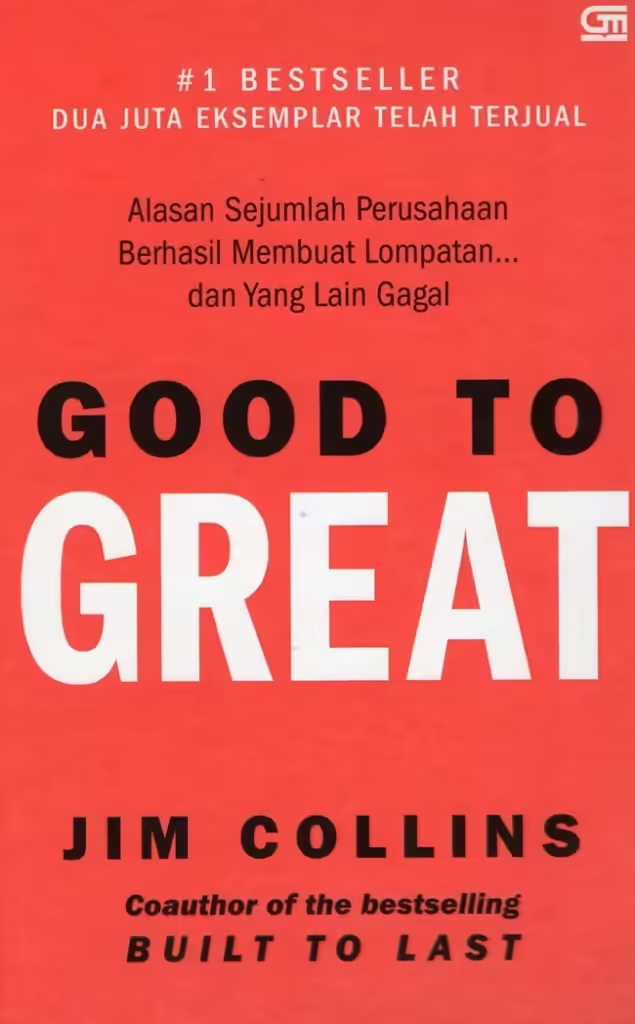
Overview: Why Good to Great Still Matters Today
In business, “good” often becomes the enemy of “great.” Too many organizations settle for being “good enough,” never realizing their potential for greatness. Jim Collins, through five years of extensive research, identified why some companies made the leap to greatness—and sustained it—while others remained average.
Good to Great isn’t just a business book—it’s a guide for entrepreneurs, startup founders, and even individuals striving for self-development. It shows us that greatness isn’t about luck; it’s about discipline, leadership, and focus.
Key Concepts & Steps from Good to Great
1. Level 5 Leadership: Humility + Fierce Will
Collins found that the most successful companies had “Level 5 Leaders.” These leaders aren’t charismatic celebrities; they are humble, determined, and focused on building lasting greatness.
-
Levels of Leadership Pyramid:
-
Level 1: Capable Individual
-
Level 2: Contributing Team Member
-
Level 3: Competent Manager
-
Level 4: Effective Leader
-
Level 5: Executive Leader – humble yet driven to build enduring greatness
-
🔑 Lesson: True leaders share praise, take blame, and put the company’s mission above personal ego.
💡 Real-Life Example:
Darwin E. Smith, CEO of Kimberly-Clark, was a quiet and humble leader. He made the bold decision to sell the company’s paper mills and invest in consumer paper products like Kleenex and Huggies. Many thought it was a disaster, but under his leadership, Kimberly-Clark outperformed rivals like Procter & Gamble.
👉 Personal Development Tip: In your own journey, practice humility. Acknowledge your team’s contributions and stay committed to long-term success rather than short-term recognition.
2. First Who, Then What
Collins emphasizes: Get the right people on the bus, the wrong people off the bus, and the right people in the right seats—then decide where to drive it.
-
Great companies prioritize people before strategy.
-
When you have disciplined, talented, motivated people, you can adapt to any challenge.
💡 Real-Life Example:
Netflix, during its transition from DVD rentals to streaming, succeeded because Reed Hastings had the right team in place. Instead of sticking to outdated business models, the team was agile enough to pivot toward streaming, which made Netflix a global powerhouse.
👉 Action Tip: Don’t rush to fill seats. Hire slow, fire fast. And always place your best talent on your biggest opportunities.
3. Confront the Brutal Facts (Yet Never Lose Faith)
Collins teaches that greatness comes from facing reality head-on, no matter how harsh it is.
-
Leaders must create a culture where truth is heard.
-
Use dialogue and debate instead of blind decisions.
-
Learn from failures without pointing fingers.
💡 Real-Life Example:
Intel’s Andy Grove made the tough call to exit the memory chip business when Japan started dominating. Instead of clinging to pride, he pivoted Intel toward microprocessors—a decision that defined the company’s future.
👉 Personal Growth Tip: In your career or startup, don’t ignore warning signs. Face the facts, but stay committed to your vision.
4. The Hedgehog Concept: Simplicity in Focus
The Hedgehog Concept is about clarity and discipline. Great companies simplify their focus into three intersecting circles:
-
What you are deeply passionate about
-
What you can be the best in the world at
-
What drives your economic engine
At the intersection lies your Hedgehog Concept—your guiding north star.
💡 Real-Life Example:
Apple under Steve Jobs focused on innovation and simplicity. Instead of trying to compete in every market, Apple narrowed down to products they could be the best at—like the iPhone and Mac. This focus led to unprecedented success.
👉 Action Tip: Reflect on your life or business—find your Hedgehog Concept by asking:
-
What makes me come alive?
-
Where can I excel beyond others?
-
What makes money consistently?
5. Culture of Discipline
A culture of discipline means freedom and responsibility within a framework.
-
Great companies aren’t bureaucratic. They hire disciplined people who don’t need micromanagement.
-
Employees are free to innovate, but disciplined enough to stick to the Hedgehog Concept.
💡 Real-Life Example:
Southwest Airlines built a disciplined culture where every employee—from pilots to ground staff—was committed to keeping costs low and efficiency high. That discipline allowed it to remain profitable while many airlines struggled.
👉 Personal Growth Tip: Create daily systems that support your goals. Discipline is less about restriction, more about consistency.
6. Technology as an Accelerator (Not a Creator)
Technology doesn’t create greatness—it accelerates it.
-
Great companies use technology aligned with their Hedgehog Concept.
-
They don’t chase shiny tools; they adopt tech when it amplifies their core mission.
💡 Real-Life Example:
Amazon used technology to accelerate its vision of customer obsession. From personalized recommendations to AWS cloud services, technology was always a tool to serve their mission—not a distraction.
👉 Startup Tip: Don’t adopt every new tool. Choose technologies that directly support your Hedgehog Concept.
7. The Flywheel and Doom Loop
Greatness isn’t achieved overnight. The Flywheel represents small, consistent pushes that build unstoppable momentum over time.
-
Each small win compounds into big success.
-
The Doom Loop is the opposite—companies make drastic shifts without building momentum, leading to collapse.
💡 Real-Life Example:
Microsoft under Bill Gates built its empire through decades of momentum—developing operating systems, office software, and cloud technology. Each push added to its flywheel.
👉 Action Tip: Build habits and systems that accumulate momentum. Small, consistent actions eventually create unstoppable progress.
Action Plan: How You Can Apply These Lessons
-
Identify Your Hedgehog Concept: Journal about your passion, strengths, and money-driving skills.
-
Audit Your Team: Surround yourself with disciplined, ambitious people.
-
Face the Brutal Facts: Make a list of your current obstacles. Address them honestly.
-
Build a Flywheel: Start small but stay consistent. Success compounds.
-
Lead Like a Level 5 Leader: Stay humble but fiercely determined.
Lessons Learned (10 Takeaways from Good to Great)
-
Good is the enemy of great—never settle.
-
Great leadership is humble yet determined.
-
People before strategy—hire right.
-
Face brutal facts without losing faith.
-
The Hedgehog Concept drives focus.
-
Discipline creates freedom.
-
Technology is an accelerator, not the cause.
-
Flywheel momentum builds greatness.
-
Shortcuts and quick fixes lead to doom.
-
Greatness is built, not born.
Step-by-Step Guide for Practical Implementation
-
Self-Assessment: Define your Hedgehog Concept.
-
Leadership Growth: Develop humility and resilience.
-
Team Building: Audit your circle, hire/partner wisely.
-
Brutal Reality Check: List your toughest challenges.
-
System Building: Create routines that reinforce discipline.
-
Tech Alignment: Use only tools that fuel your core mission.
-
Momentum Creation: Take consistent small actions daily.
Call to Action
Inspired by these lessons? Don’t just read Good to Great by Jim Collins—live it. Start applying these timeless principles to your business, career, or personal growth journey today.
🌐 Visit www.mycashflowhub.com or call 📞 885-511869 to explore how we can help you bring financial discipline, strategy, and transformation into your life.
Disclaimer
This blog is for educational and inspirational purposes only, summarizing concepts from Good to Great by Jim Collins. The examples are illustrative and adapted to explain principles in real-world contexts.