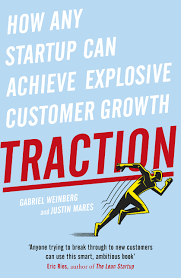
Building a product is exciting. Launching a company is thrilling. But what actually keeps a startup alive? Customers. Growth. Momentum. In short—Traction.
And that’s exactly what Gabriel Weinberg’s bestselling book Traction teaches:
“Almost every failed startup has the same problem: they couldn’t get traction.”
In this deep-dive blog, written as an expert storyteller and growth strategist, let’s unpack the core lessons, 19 traction channels, and real-life examples that show how any entrepreneur can achieve explosive business growth
Why Traction Matters: An Overview
Every entrepreneur dreams of building the next unicorn startup. But dreams meet reality when customer acquisition fails.
According to Weinberg:
- A startup fails not because the product was bad
- It fails because it didn’t gain traction
Traction = growth + customers + consistent acquisition.
This book is designed for:
- Entrepreneurs
- Startup founders
- Business owners scaling their customer base
- Marketers and growth teams
The promise is simple:
If you master the traction channels, you can grow any business—no matter what stage you’re in.
The Three Big Ideas That Power Traction
1️⃣ 50% Product + 50% Traction
Most founders spend 95% of their time building the product and leave marketing “for later.”
But Weinberg flips this.
“A great product is meaningless without customers.”
When Airbnb started, the founders spent equal time improving the product and testing traction channels like photography, blogging, and Craigslist posting automation.
If you want real growth:
- Spend 50% time building
- Spend 50% time marketing
2️⃣ The Bullseye Framework — The Heart of the Book
Weinberg’s Bullseye Framework helps startups find the best traction channel quickly.
Step 1: Brainstorm All 19 Channels
List all possible ways you might reach customers.
Step 2: Select 3–5 Most Promising Channels
Don’t rely on bias—use data.
Step 3: Run Cheap Tests
Spend small amounts to see what works.
Step 4: Focus on the “Bullseye” Channel
Go all in on the channel that gives the best ROI.
This simple process has helped thousands of companies—from small businesses to billion-dollar startups—find the channel that works.
3️⃣ Look for Underutilized Channels
Your best opportunity for traction may be somewhere your competitors ignore.
For example:
- When Dropbox launched, instead of running ads…
- They used viral referral incentives: “Get more storage by inviting friends.”
- It became one of the fastest-growing startups in history.
The 19 Traction Channels (Explained with Examples & Tips)
Here are the channels startups can leverage to scale rapidly.
1. Viral Marketing
Examples: Dropbox, Hotmail
- Create incentives for users to share.
- Use simple referral rewards.
Tip: Add sharing inside your product—not outside.
2. Public Relations (PR)
Example: Tesla launches
- Use media stories to build awareness.
Tip: Pitch journalists with emotional narratives, not features.
3. Unconventional PR (Stunts)
Example: Red Bull skydiving stunt
- Big, bold moments that get talked about.
Tip: Must be memorable + aligned with brand.
4. Search Engine Marketing (SEM)
Paid Google Ads
- Works when targeting intent-based customers.
5. Social & Display Ads
Example: Facebook/Instagram Ads
- Best for targeting niche audiences.
Tip: Start with small budgets and A/B test creatives.
6. Offline Ads
Billboards, radio, magazines
- Still effective for local businesses.
7. Search Engine Optimization (SEO)
Rank on Google organically
- Best for long-term inbound leads.
Tip: Create high-quality blogs and optimize technical SEO.
8. Content Marketing
Example: HubSpot blogs
- Build authority with educational content.
9. Email Marketing
- Newsletters, product launches, nurturing.
Tip: Focus on value, not sales.
10. Targeting Blogs
Guest posts, affiliate blogs
- Reach warm audiences through industry blogs.
11. Engineering as Marketing
Tools like:
- HubSpot Website Grader
- Ubersuggest
Tip: Build simple tools that attract leads.
12. Business Development (BD)
Partnerships that help reach new users.
13. Sales (B2B)
Hiring a sales team for enterprise deals.
14. Affiliate Programs
Influencers earn a commission.
Example: Amazon Associates.
15. Existing Platforms
Launching on:
- Amazon
- App Store
- Shopify marketplace
16. Trade Shows
Show off your new product.
17. Offline Events
Workshops, meetups, local events.
18. Speaking Engagements
Become the expert.
- Bring leads through credibility.
19. Community Building
Example: Notion Ambassadors, Reddit groups
- Build loyal fans who spread the word.
Real-Life Success Examples Using Traction Framework
🔥 Example 1: Notion’s Community Strategy
Notion didn’t grow through ads—they grew through community building, one of the 19 traction channels.
- They created ambassador programs
- Encouraged templates-sharing
- Built a loyal fanbase
Today, Notion is a multi-billion dollar company because of traction, not ads.
🔥 Example 2: Robinhood’s Viral Waitlist
Before launching publicly, Robinhood used a referral-based viral marketing system.
- Invite friends = move up in the waitlist
- No paid ads
- Over 1 million signups before launch
A perfect example of viral traction.
Action Plan: How You Can Apply Traction in Your Business
Step 1: Define Your Traction Goal
Examples:
- Get 500 customers
- Hit ₹5,00,000 monthly revenue
Step 2: Use the Bullseye Framework
- Brainstorm all 19 channels
- Pick top 3
- Test quickly
Step 3: Run Small Experiments
Spend little.
Learn fast.
Scale what works.
Step 4: Improve Your Product Using Customer Feedback
Marketing + product must evolve together.
Step 5: Focus on ONE Traction Channel at a Time
Master it.
Scale it.
Expand later.
Lessons Learned: Biggest Takeaways from Traction
- A great product isn’t enough—you need customers.
- Marketing must start from Day 1, not after launch.
- Most startups fail because they don’t find traction.
- Test channels early; don’t trust assumptions.
- Focus your energy on what gives the highest ROI.
- Use the Bullseye Framework to cut confusion.
- 19 traction channels give unlimited possibilities.
- Underutilized channels are gold mines.
- Growth requires discipline—not luck.
- Traction + Product = Long-term success.
10 Takeaways from Traction by Gabriel Weinberg
- Traction is the lifeblood of every startup.
- Split time 50/50 between product and marketing.
- Use the Bullseye Framework to find your best channel.
- Test quickly and cheaply.
- Don’t let bias choose your channels.
- Viral loops are powerful and scalable.
- PR and stunts still work in today’s age.
- Community building is a long-term growth engine.
- SEO + content = sustainable inbound growth.
- Traction leads to predictable business success.
Call to Action
If you’re serious about growing your startup or business, Traction is not just a book—it’s a blueprint.
🔥 Start applying these strategies today.
🔥 Test channels.
🔥 Focus on what works.
🔥 Build momentum and grow consistently.
For more business insights, guidance, and personal financial planning help:
🌐 www.mycashflowhub.com
📞 8850511869
Disclaimer
This blog is a summary created for educational and storytelling purposes. It is not an official representation of the author’s work. Always refer to the original book Traction by Gabriel Weinberg for complete insights.