How the choices you make in the first year of your startup can define your entire life
Why The Founder’s Dilemmas Matters More Than Any Startup Book
Most startup books teach you how to raise money, how to build products, or how to scale fast.
Very few teach you how not to destroy your company, relationships, and control along the way.
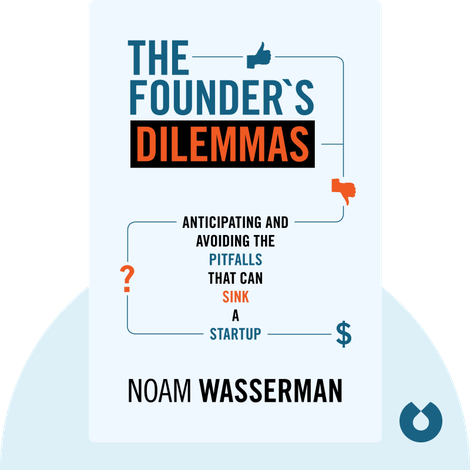
That’s exactly why The Founder’s Dilemmas: Anticipating and Avoiding the Pitfalls That Can Sink a Startup by Noam Wasserman, Harvard Business School professor, is one of the most brutally honest and important books for entrepreneurs.
Wasserman studied 10,000+ startups and over 1,000 founders and discovered a hard truth:
Most startup failures don’t happen because of bad ideas. They happen because of bad early decisions.
This book is not about motivation.
It’s about trade-offs.
-
Solo founder or co-founder?
-
Friend, family, or professional partner?
-
Control or wealth?
-
Bootstrapping or venture capital?
-
CEO forever or CEO-for-now?
If you are:
-
An entrepreneur
-
A startup founder
-
A co-founder
-
A creator thinking of raising capital
-
Or even someone planning to start “someday”
This book—and this blog—can save you years of regret.
The Core Idea: Startups Are a Series of Irreversible Decisions
Noam Wasserman calls these decisions “Founder’s Dilemmas” because:
-
There is no perfect choice
-
Every option has a cost
-
The cost often shows up years later
The tragedy?
Most founders make these decisions:
-
Emotionally
-
Under pressure
-
Without data
-
Based on myths
This book replaces myths with evidence.
Key Concept #1: Solo Founder vs Co-Founders – The First Big Dilemma
Myth: Startups Need Co-Founders
Reality: Both solo founders and teams can succeed—but for different reasons.
When Solo Founders Win
A strong solo founder usually has:
-
Deep domain expertise
-
Strong technical + business skills
-
Existing industry connections
-
Desire for full control
Example: Evan Williams (Blogger)
Evan started Blogger with minimal outside interference, retained major control, and later sold it to Google for $10 million.
But…
When Co-Founders Win
Co-founders work best when:
-
Skills are complementary, not overlapping
-
Roles are clearly defined
-
Equity is allocated fairly
-
Expectations are documented early
Steve Jobs & Steve Wozniak
-
Jobs: vision, marketing, storytelling
-
Wozniak: engineering genius
Perfect division of labor.
Big Warning: Friends & Family as Co-Founders
Wasserman’s research shows:
-
Family and romantic co-founders have the highest failure and fallout rates
Real Example: Evan Williams & His Girlfriend (Odeo)
When Odeo failed:
-
Business collapsed
-
Relationship collapsed
-
Emotional cost was massive
If the startup fails, you may lose the business AND the relationship.
Key Concept #2: Wealth vs Control – The Most Expensive Decision You’ll Ever Make
This is the heart of the book.
Every founder must answer one question:
Do you want to be rich… or in control?
Because statistically:
-
You rarely get both
The Wealth Path
-
Raise venture capital
-
Scale fast
-
Dilute equity
-
Hire professional management
-
Often lose CEO role
Data Insight:
By the time VC-backed startups are 3 years old, 50% of founders are no longer CEOs.
The Control Path
-
Bootstrap or raise minimal capital
-
Grow slower
-
Retain decision-making power
-
Own a larger share of a smaller company
Probability Reality (Wasserman’s Research)
-
Maintaining control through VC route: ~13%
-
Maximizing wealth via VC: ~1–3%
-
Bootstrapped control success: Much higher
Raising money is not the same as making money.
Key Concept #3: The R-System – Relationships, Roles, Rewards
Most startups fail internally, not externally.
Wasserman introduces the R-System to avoid this.
1. Relationships
-
How well do you actually know your co-founder?
-
Have you worked under pressure together?
-
Can you fight productively?
2. Roles
-
Who is CEO?
-
Who has final decision authority?
-
Who owns product, sales, finance?
Unclear roles = slow death.
3. Rewards
-
Equity split
-
Vesting schedules
-
Salaries
-
Exit expectations
Golden Rule:
Never split equity equally just to avoid uncomfortable conversations.
Key Concept #4: CEO-for-Life Is a Myth
Most founders assume:
“I started it, so I’ll always run it.”
Reality:
-
Investors care about scaling, not sentiment
-
Professional CEOs often replace founders
-
Emotional attachment hurts rational decisions
Bill Gates is the exception, not the rule.
Key Concept #5: Investors Change Everything
Choosing investors means choosing:
-
Control dynamics
-
Board composition
-
Growth pressure
-
Exit timelines
Bootstrapping
-
More control
-
Slower growth
-
Less stress
-
Fewer forced exits
Venture Capital
-
Faster growth
-
Dilution
-
Board oversight
-
Forced scaling
Capital is not free money. It is a contract on your future.
Real-Life Example #1: Blogger vs Odeo – Same Founder, Different Choices
Blogger
-
Bootstrapped
-
Founder control
-
Modest exit
-
Low stress
Odeo
-
VC-funded
-
External pressure
-
Lost control
-
Pivoted under stress
Same founder. Different choices. Completely different outcomes.
Real-Life Example #2: WhatsApp Founders
-
Rejected early VC pressure
-
Focused on product
-
No ads, no hype
-
Retained strong control
Eventually sold to Facebook for $19 billion—on their terms.
Action Plan: How to Apply The Founder’s Dilemma in Real Life
Step 1: Choose Your Quadrant
Ask yourself honestly:
-
Do I want control or maximum valuation?
-
Am I okay being replaced?
-
What lifestyle do I want?
Step 2: Audit Your Co-Founder Choice
Ask:
-
What skills do they add?
-
What conflicts might arise?
-
Are roles clearly defined?
Step 3: Design Equity Intentionally
-
Use vesting schedules
-
Avoid equal splits by default
-
Document everything early
Step 4: Be Strategic About Capital
-
Raise only what you need
-
Understand investor expectations
-
Read term sheets carefully
Lessons Learned from The Founder’s Dilemmas
-
Early decisions matter more than later execution
-
Control and wealth rarely coexist
-
Co-founders amplify both success and failure
-
Relationships can destroy companies
-
VC money accelerates pressure
-
Bootstrapping increases autonomy
-
Titles don’t guarantee power
-
Equal equity splits are usually wrong
-
CEOs are replaceable
-
Conscious trade-offs beat blind ambition
10 Key Takeaways from The Founder’s Dilemmas
-
Startups are temporary organizations searching for clarity
-
Solo founders are underrated
-
Co-founder misalignment is fatal
-
Control is often traded unknowingly
-
Investors reshape companies
-
Boards influence outcomes
-
Emotional decisions cost equity
-
Power shifts early, not late
-
Slower growth can mean better outcomes
-
The best founders choose deliberately
Reflection: What This Book Teaches Every Entrepreneur
Noam Wasserman doesn’t tell you what choice is right.
He teaches you something far more valuable:
Make your choice consciously, not accidentally.
Success isn’t just about money.
It’s about ownership of your time, vision, and values.
Call to Action
Inspired by these insights?
This is just one deep dive in our Book to Life series.
📘 Read The Founder’s Dilemmas by Noam Wasserman
✍️ Reflect on your own startup decisions
🚀 Build a company aligned with your definition of success
Because the most dangerous startup mistakes are the ones you don’t even realize you’re making