(Stories, struggles, pivots, and survival lessons from the world’s most iconic founders)
Why Founders at Work Still Matters Today
In a world flooded with startup advice, growth hacks, and overnight-success headlines, Founders at Work by Jessica Livingston stands apart.
This book doesn’t preach theories.
It doesn’t sell fantasies.
It doesn’t promise unicorn outcomes.
Instead, it documents reality.
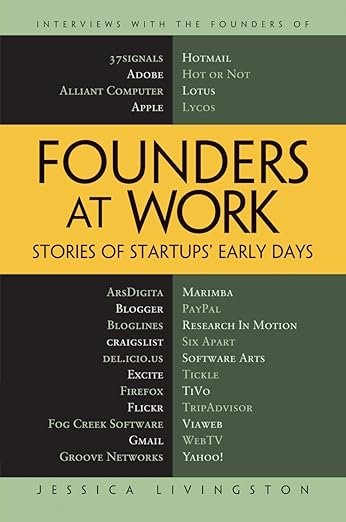
Written by Jessica Livingston, co-founder of Y Combinator, the book is a collection of deep, honest interviews with founders behind companies like PayPal, Yahoo, Hotmail, Flickr, Blogger, Apple, and WebTV. These interviews capture the raw early days—before press coverage, before funding rounds, before success was guaranteed.
At its core, Founders at Work answers one powerful question:
“What actually happens when people try to build something from nothing?”
This book is for:
-
Entrepreneurs and startup founders
-
Aspiring business owners
-
Product builders and creators
-
Anyone interested in self growth and development through real-world experience
If you want truth over hype, this book—and this summary—is for you.
The Soul of the Book: Stories from the Early Days of Startups
Most startup stories are told backward—from success to origin.
Founders at Work flips that.
Jessica Livingston interviews founders while zooming into the messy middle:
-
Confusing first ideas
-
Constant pivots
-
Running out of money
-
Disagreements with co-founders
-
Rejected investors
-
Products nobody wanted—at first
These stories reveal a powerful truth:
Startups don’t begin with clarity. They begin with curiosity, chaos, and courage.
Key Concept 1: Your First Idea Is Probably Wrong — And That’s Okay
Lesson: It’s okay if your startup doesn’t end up being what you first imagined
One of the most repeated themes in Founders at Work is this:
Very few successful startups succeed with their original idea.
Real-Life Example: PayPal
PayPal didn’t start as PayPal.
The original idea?
-
A secure software system for portable digital devices
That idea failed.
While testing, the founders noticed something unexpected:
-
People were struggling to send money securely online
-
Credit cards weren’t trusted online yet
They pivoted—not randomly, but by observing user behavior.
➡️ That pivot became PayPal, a company that transformed online payments forever.
Key takeaway:
Your job as a founder is not to protect your idea.
Your job is to discover what people actually want.
Key Concept 2: Struggling for a Truly Innovative Idea Is Normal
Lesson: Innovation isn’t about brilliance—it’s about relevance
Many founders assume:
“If my idea is truly innovative, it should feel obvious.”
In reality, most innovative ideas feel unclear and risky at first.
Example: Hotmail
Sabeer Bhatia didn’t invent email.
He noticed something simple:
-
People wanted free email
-
People wanted access from anywhere
-
Corporate email systems restricted both
Hotmail solved a frustration, not a fantasy.
➡️ Innovation often means removing friction, not adding features.
Practical tip:
Ask:
-
What frustrates people repeatedly?
-
What workaround do they already use?
That’s where innovation hides.
Key Concept 3: A Great Team Can Matter More Than a Great Idea
Lesson: Ideas change. Teams endure.
Many startups didn’t begin with a clear direction.
What they had instead:
-
Curious minds
-
Strong collaboration
-
Willingness to experiment
Real-Life Example: Excite
The founders of Excite didn’t start with a grand vision of a search engine.
They:
-
Explored multiple ideas
-
Tested directions
-
Worked intensely as a team
Eventually, their exploration led them to web search—which defined their success.
Key insight:
A motivated, adaptable team can find the right idea faster than a lone genius with a rigid plan.
Key Concept 4: Personal Projects Can Become Global Companies
Lesson: Many legendary startups began as hobbies
Example: Yahoo
Yahoo started as:
-
A personal collection of online bookmarks
-
Built for a PhD research project
There was no business model.
No funding plan.
No pitch deck.
Just utility.
As more people used it, demand grew.
➡️ Yahoo evolved from a hobby into a global company.
Lesson for founders:
Don’t underestimate side projects.
If people use it without marketing—it matters.
Key Concept 5: Simplicity Beats Sophistication
Lesson: Do more with less
Many founders in the book talk about:
-
Limited money
-
Limited tools
-
Limited manpower
Instead of waiting for perfection, they:
-
Built simple products
-
Avoided overengineering
-
Focused on core functionality
Why simplicity wins:
-
Faster iteration
-
Lower costs
-
Clearer user experience
A product that works today beats a perfect product that never launches.
Key Concept 6: Venture Capital Is Not Always the Right Choice
Lesson: Money comes with strings
One of the most surprising insights from Founders at Work is that venture capital isn’t always helpful, especially early on.
Many founders:
-
Lost control
-
Were forced into decisions they didn’t believe in
-
Compromised vision for growth metrics
Example: Blogger
Blogger resisted VC pressure.
By staying lean and independent, they:
-
Retained control
-
Made faster decisions
-
Eventually sold on their own terms
Key idea:
Raising money is not success.
Building a sustainable business is.
Key Concept 7: Doing More with Less Is the True Entrepreneur Mindset
Across stories, a pattern emerges:
Successful founders:
-
Operated with scarcity
-
Used constraints creatively
-
Learned faster because failure was cheap
This mindset built:
-
Discipline
-
Resilience
-
Focus
Entrepreneurship is not about abundance.
It’s about resourcefulness.
Action Plan: How You Can Apply Founders at Work in Real Life
Step 1: Start Small and Launch Early
-
Don’t wait for perfection
-
Release something useful
Step 2: Talk to Users Constantly
-
Observe behavior
-
Listen to frustration
-
Let reality guide decisions
Step 3: Be Willing to Pivot
-
If evidence contradicts your idea—adapt
-
Pivoting is progress, not failure
Step 4: Build a Strong Team
-
Complementary skills
-
Shared values
-
Trust over titles
Step 5: Delay Funding if Possible
-
Validate before raising
-
Control beats cash early on
Lessons Learned: Biggest Takeaways from the Book
-
Most successful startups didn’t start with their final idea
-
Execution matters more than inspiration
-
Teams outperform solo brilliance
-
Simplicity accelerates growth
-
User behavior is better than opinions
-
Funding can slow you down
-
Constraints fuel creativity
-
Control often matters more than valuation
-
Persistence beats genius
-
Success looks messy from the inside
Step-by-Step Startup Guide Inspired by Founders at Work
-
Identify a real user problem
-
Build the simplest possible solution
-
Launch fast
-
Collect honest feedback
-
Improve what users actually use
-
Remove what they don’t
-
Pivot if needed
-
Grow sustainably
-
Protect your culture
-
Let success compound
10 Powerful Takeaways from Founders at Work
-
First ideas rarely survive
-
Great teams find great ideas
-
Simplicity wins
-
Funding isn’t validation
-
Users reveal the truth
-
Control enables creativity
-
Side projects matter
-
Failure teaches faster than success
-
Lean startups survive longer
-
Building is harder—and more human—than it looks
Final Reflection: What This Book Teaches Beyond Business
Founders at Work is not just a startup book.
It’s a self growth and development manual disguised as business history.
It teaches:
-
Patience
-
Humility
-
Adaptability
-
Courage
It reminds us that every successful founder once doubted everything.
Call to Action
Inspired by these real startup journeys?
This is just one story in our Book to Life series.
📘 Read Founders at Work by Jessica Livingston
🚀 Apply its lessons to your own business or career
✍️ Start building—before you feel ready
Because every great company once started with uncertainty.