
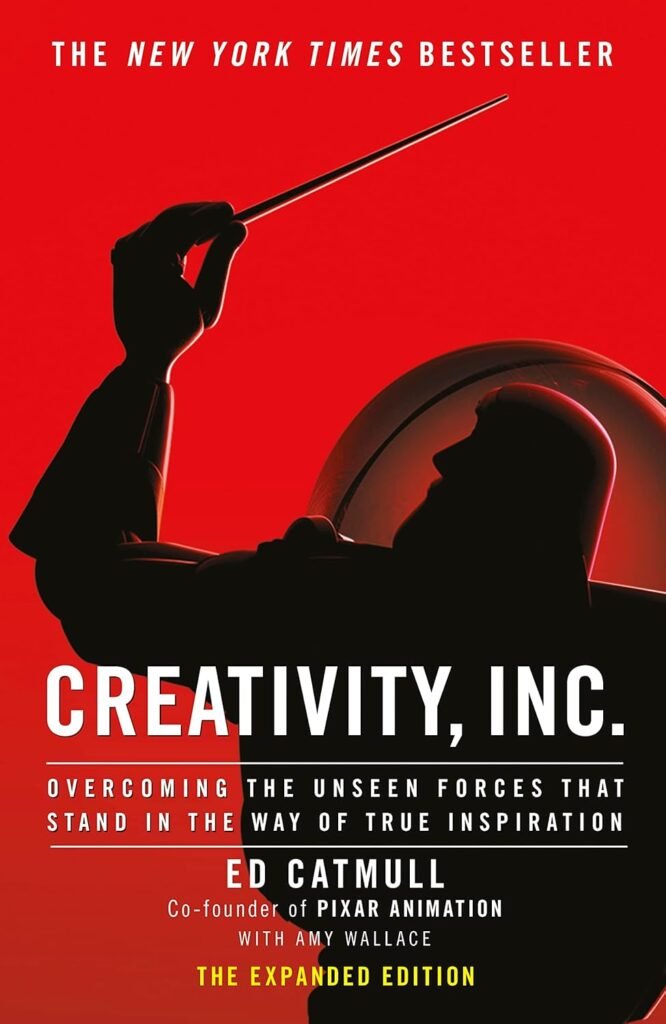
Why Creativity, Inc. Matters and Who It’s For
Creativity is fragile.
That is the core truth Ed Catmull reveals in Creativity, Inc.: Overcoming the Unseen Forces That Stand in the Way of True Inspiration. Written by the co-founder of Pixar Animation Studios and former president of Walt Disney Animation Studios, this book is a rare blend of memoir, leadership manual, and innovation playbook.
Unlike most business books that glorify strategy and execution, Creativity, Inc. focuses on something far more important—and far more difficult:
How to build an environment where creative people can consistently do their best work.
This book is for:
-
Entrepreneurs and startup founders
-
Leaders managing creative or technical teams
-
Managers struggling with fear, hierarchy, and politics
-
Anyone who wants to build a culture of trust, learning, and innovation
-
Professionals interested in self-growth, leadership development, and long-term success
Pixar didn’t dominate animation because of luck. It did so because of intentional leadership choices, many of which go against traditional management thinking.
The Story Behind Pixar: Creativity Born from Struggle
Pixar’s success looks obvious in hindsight—but it was anything but easy.
For nearly five years, Pixar struggled financially. Toy Story, now considered a masterpiece, was almost a disaster. Early versions were bad—so bad that Disney executives nearly shut the project down.
What saved Pixar wasn’t technology. It wasn’t money. It wasn’t even Steve Jobs’ funding.
It was culture.
Ed Catmull believed that:
-
If you build the right environment
-
Hire the right people
-
And protect the creative process
…great work will eventually emerge.
That belief is the soul of Creativity, Inc.
Key Concepts & Principles from Creativity, Inc. (Deep Dive)
1. People Are More Important Than Ideas
One of the most powerful lessons in the book is simple but counterintuitive:
“If you give a great idea to a mediocre team, they will screw it up. If you give a mediocre idea to a great team, they will fix it—or throw it away and come up with something better.”
Pixar didn’t worship ideas. It invested in people.
Practical Lesson:
-
Hire for curiosity, humility, and learning ability
-
Develop people continuously
-
Trust your team to improve ideas over time
Real-Life Example:
A Bangalore-based design startup shifted hiring from “best portfolio” to “best collaborators.” Within a year, product quality and speed improved dramatically—even though initial ideas were simpler.
2. Candor Is the Foundation of Creative Culture
Pixar institutionalized honesty through a system called the Braintrust—a group of experienced creatives who give blunt feedback on films.
Key rule:
-
Feedback is mandatory
-
Authority is irrelevant
-
Directors are not obligated to follow advice
The goal isn’t consensus—it’s clarity.
Important Distinction:
-
Criticism attacks people
-
Candor attacks problems
Practical Tip:
-
Separate ego from work
-
Create safe spaces for disagreement
-
Encourage debate without hierarchy
Real-Life Example:
At a global SaaS company, leadership introduced “problem-first reviews.” Instead of blaming teams, meetings focused on what’s wrong, missing, or unclear. Engagement and innovation skyrocketed.
3. Fear Is the Enemy of Creativity
Ed Catmull repeatedly emphasizes that fear quietly kills innovation.
Fear of:
-
Looking stupid
-
Failing publicly
-
Challenging authority
-
Taking risks
Pixar leaders actively looked for fear and removed it.
“The antidote to fear is trust.”
Practical Actions:
-
Reward learning, not just success
-
Normalize failure as data
-
Leaders should admit mistakes publicly
Lesson for Entrepreneurs:
If your team is silent, it’s not alignment—it’s fear.
4. Failure Is Not a Necessary Evil—It’s a Requirement
Pixar films always start out bad.
Every. Single. One.
The company accepts this as part of the creative process. Early failure is not a sign of incompetence—it’s proof of exploration.
Core Belief:
Any outcome is a good outcome if it produces learning.
Practical Tip:
-
Build fast feedback loops
-
Treat mistakes as experiments
-
Ask: What did we learn?
Startup Insight:
Management’s job is not to prevent failure, but to build the capacity to recover quickly.
5. Do Not Confuse Process with Purpose
Processes are tools—not goals.
Pixar constantly evaluated whether processes were helping creativity or suffocating it.
Danger:
When people follow process blindly, innovation dies.
Solution:
-
Trust the process, but question it
-
Adjust rules as teams evolve
-
Avoid bureaucracy for its own sake
6. Everyone Should Be Able to Talk to Anyone
Pixar removed communication barriers.
No rigid hierarchy. No “go through your manager.” Anyone could talk to anyone if it helped the work.
This openness:
-
Prevented blind spots
-
Surfaced problems early
-
Built shared ownership
Practical Tip for Leaders:
-
Flatten communication
-
Encourage cross-functional dialogue
-
Remove permission-based conversations
Action Plan: How You Can Apply Creativity, Inc. in Real Life
Step 1: Audit Fear in Your Environment
Ask:
-
Where do people hesitate to speak?
-
What mistakes are punished?
-
Who feels unheard?
Step 2: Build Candor into Systems
-
Weekly feedback sessions
-
Retrospectives focused on problems, not people
-
Encourage disagreement respectfully
Step 3: Hire for Learning, Not Perfection
-
Value adaptability over expertise
-
Reward curiosity and humility
Step 4: Redefine Failure
-
Treat experiments as progress
-
Capture learning from every setback
Step 5: Lead by Getting Out of the Way
-
Set direction
-
Remove obstacles
-
Trust your team
Lessons Learned: The Biggest Takeaways from Creativity, Inc.
-
Creativity thrives in safe environments
-
People matter more than ideas
-
Candor is kindness when done right
-
Fear is invisible but destructive
-
Failure fuels learning
-
Leadership is environment design
-
Communication beats hierarchy
-
Quality is the best business plan
-
Process must serve purpose
-
Great leaders protect creativity, not control it
Step-by-Step Guide to Building a Creative Culture
-
Hire people smarter than you
-
Encourage honest feedback
-
Remove fear from conversations
-
Separate ideas from ego
-
Normalize early failure
-
Create cross-team communication
-
Continuously challenge systems
-
Focus on long-term quality
-
Reward learning, not compliance
-
Get out of the way of great people
10 Key Takeaways from Creativity, Inc. by Ed Catmull
-
Culture determines creative success
-
Trust beats control
-
Fear is creativity’s biggest enemy
-
Candor improves ideas, not egos
-
Great teams fix bad ideas
-
Failure is information
-
Leadership is about environment, not authority
-
Communication must be unhindered
-
Quality drives long-term success
-
Creativity is a system, not a talent
Conclusion: Creativity Is a Leadership Responsibility
Ed Catmull’s final message is profound:
Creativity isn’t about having brilliant ideas. It’s about creating the conditions where brilliance can emerge.
Whether you’re building a startup, leading a team, or shaping your own personal growth, Creativity, Inc. teaches one timeless truth:
Your job is not to be the smartest person in the room—your job is to make the room smarter.
Call to Action
Inspired by Pixar’s journey?
Read Creativity, Inc. by Ed Catmull, apply just one principle this week, and start building an environment where creativity—and people—can truly thrive.
This is more than a book.
It’s a blueprint for lasting innovation, leadership, and success.