Why being broke isn’t a weakness—but the secret weapon behind world-class entrepreneurs
Why The Power of Broke Matters More Than Ever
What if having no money was actually your biggest advantage?
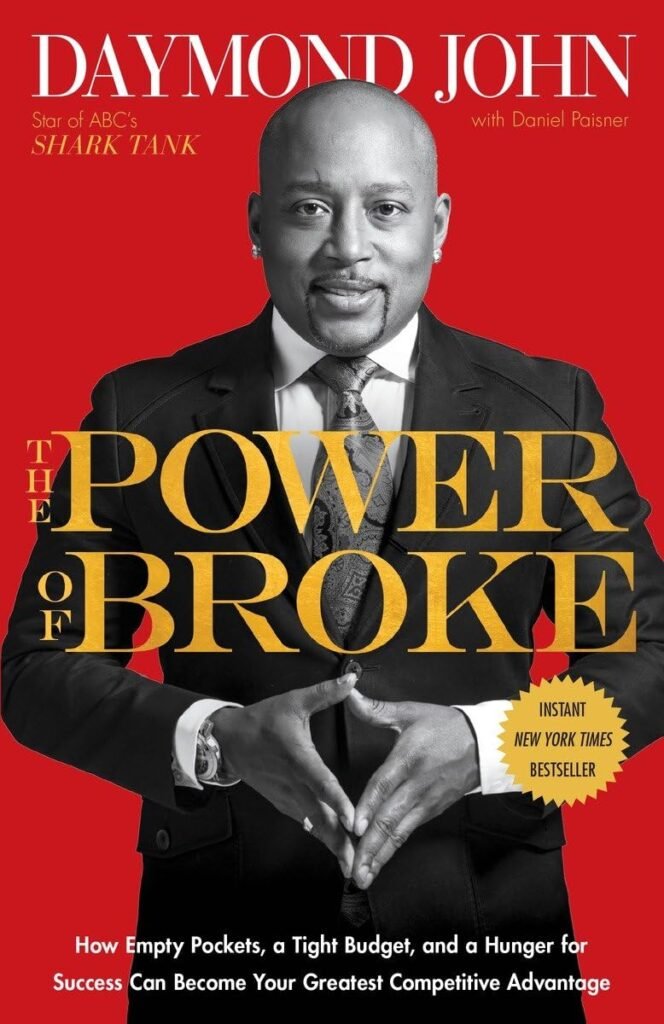
In a world obsessed with venture capital, shiny offices, and “unicorn” valuations, The Power of Broke by Daymond John, co-founder of FUBU and Shark Tank investor, delivers a counter-intuitive truth:
Scarcity fuels creativity. Hunger sharpens focus. Broke builds discipline.
This book isn’t about business plans filled with jargon. It’s about mindset, grit, hustle, and street-level entrepreneurship. Daymond John—who started FUBU by sewing hats in his mother’s house—shows how limited resources force you to think smarter, move faster, and build businesses that actually work
This book is for:
-
Aspiring entrepreneurs without capital
-
Small business owners stuck in survival mode
-
Professionals seeking independence
-
Creators, freelancers, and side-hustlers
-
Anyone afraid to start because they feel “not ready”
The Core Philosophy: Broke Is a Mindset, Not a Bank Balance
The power of broke is a mindset that exists even after you gain capital
Being broke forces you to:
-
Validate ideas before spending money
-
Focus on customers, not investors
-
Build demand before supply
-
Learn sales before scaling
-
Respect every rupee or dollar
Daymond emphasizes that many people who have money fail because they never learned discipline—while those who start broke often build resilient, profitable businesses.
Key Concept 1: Start With a Goal (But Prepare for the Worst)
Lesson 1: Set a Goal
-
Be clear about what you want
-
Imagine the best-case scenario
-
Prepare for the worst-case outcome
-
Start anyway
Daymond explains that broke entrepreneurs calculate risk differently. When you don’t have much to lose, you’re often more willing to experiment, pivot, and learn.
Real-Life Example
A streetwear founder in Mumbai began selling custom t-shirts using Instagram Stories and pre-orders. No inventory. No ads. Within six months, cash flow funded expansion—without loans or investors.
Key Concept 2: Homework Beats Capital
“Do your homework. Know your market better than anyone.”
Lesson 2: Homework Pays
-
Study competitors deeply
-
Understand pricing psychology
-
Know what customers hate (not just what they like)
-
Learn from case studies of failures and successes
Broke entrepreneurs can’t afford assumptions. They must replace money with intelligence.
Case Study: FUBU
Daymond didn’t start with fashion degrees or VC funding. He studied:
-
Hip-hop culture
-
Consumer identity
-
Grassroots marketing
-
Street credibility
That homework turned a $40 hat into a $6 billion brand.
Key Concept 3: Do What You Love—but Validate It
People invest in people, not just products.
Lesson 3: Do What You Love (But Test It)
-
Passion matters—but only if the market agrees
-
Belief in your product must be contagious
-
If you love it enough, you’ll find a way to make it work
Daymond warns against blind passion. Broke entrepreneurs validate fast because failure is expensive.
Key Concept 4: Define Yourself Before the Market Does
Lesson 4: Define Yourself
-
Niche → Just do it
-
Apply → Things multiply
-
Demand → People notice
When you’re broke, you can’t be everything to everyone. You must:
-
Pick a niche
-
Solve one painful problem
-
Own one clear identity
Example
A fitness coach targets “busy IT professionals over 35” instead of “everyone who wants fitness.” Result? Higher trust, higher pricing, faster referrals.
Key Concept 5: Keep Swimming (Relentless Persistence)
One of the strongest metaphors :
“Keep swimming.”
Lesson 5: Relentless Hustle
-
Failure is feedback, not defeat
-
60% of wealthy people came from working families
-
Many top athletes came from humble beginnings
Broke entrepreneurs don’t quit because quitting is costlier than continuing.
The SHARK Framework
Clearly outline the SHARK model:
-
S – Set a goal
-
H – Homework / Do your research
-
A – Accept what you do (own it)
-
R – Remember you are broke (stay disciplined)
-
K – Keep swimming (persist)
This framework summarizes the entire philosophy of the book.
Avoid the Biggest Trap: Over-Funding Too Early
Avoid over-funding. Many mistakes happen when you have too much money too soon.
Daymond explains:
-
Easy money hides bad ideas
-
Scarcity forces efficiency
-
Discipline disappears with excess capital
Many startups fail not because they lacked funding—but because they raised money before product-market fit.
Action Plan: How to Apply The Power of Broke in Real Life
Step 1: Write Down 4 Clear Goals
-
Health
-
Family
-
Business
-
Financial freedom
Step 2: Study Your Market for 14 Days
-
Talk to customers
-
Study competitors
-
Identify gaps
Step 3: Start Small
-
Pre-sell
-
Pilot
-
Test demand
Step 4: Use OPM (Other People’s Money)
-
Partnerships
-
Skill exchanges
-
Collaborations
-
Revenue-funded growth
Step 5: Build Brand Layers
List 4 layers:
-
Product
-
Name
-
Brand message
-
Lifestyle story
Lessons Learned: The Biggest Takeaways
-
Broke builds creativity
-
Scarcity sharpens focus
-
Passion + discipline beats money
-
Market validation > ideas
-
Identity beats imitation
-
Persistence compounds
-
Sales skills matter more than funding
-
Over-funding kills discipline
-
People buy belief before products
-
Start today—don’t wait
Step-by-Step Guide for Entrepreneurs
-
Start before you feel ready
-
Test demand cheaply
-
Learn sales early
-
Avoid lifestyle inflation
-
Reinvest profits
-
Build resilience, not dependency
Call to Action
Inspired by Daymond John’s journey?
This is just one story in our Book to Life series. Read The Power of Broke by Daymond John & Daniel Paisner, apply one principle today, and turn your limitations into leverage.