(A Book to Life Story Inspired by Lost and Founder by Rand Fishkin)
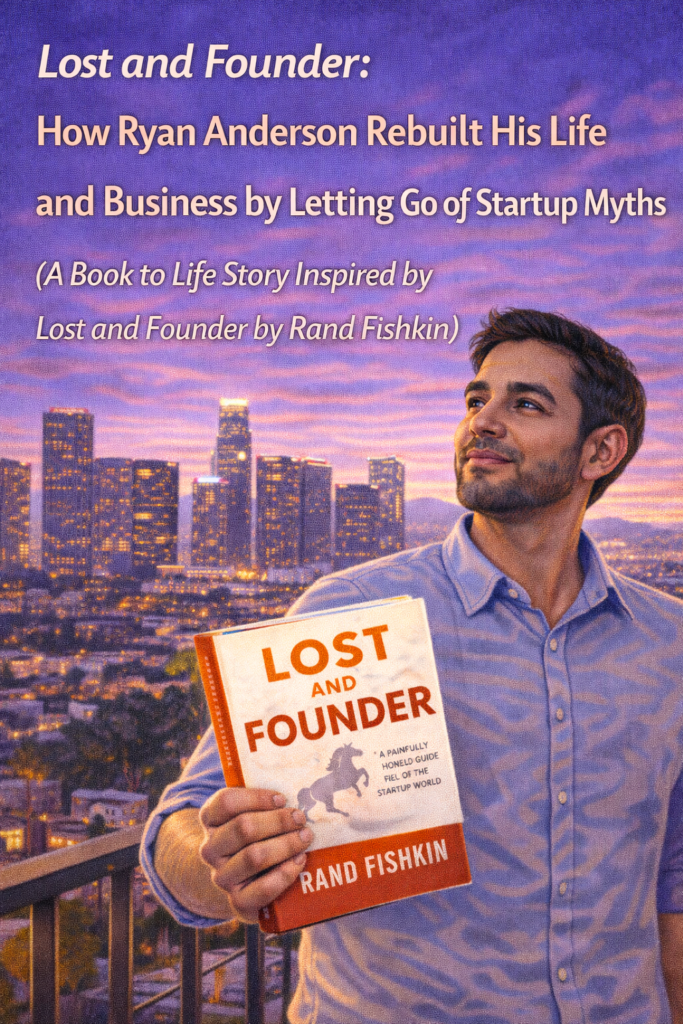
A powerful Book to Life story on how Lost and Founder by Rand Fishkin helped Ryan Anderson rebuild his startup, mindset, and life.
Ryan Anderson had done everything “right.”
At least according to startup Twitter, podcasts, and LinkedIn gurus.
He had quit his job in Los Angeles.
He had launched a SaaS product.
He had pitched investors.
He worked 14-hour days.
Yet at 33, sitting alone in a coffee shop on Sunset Boulevard, Ryan stared at his bank balance and felt something worse than fear.
Shame.
That’s when a single book—Lost and Founder by Rand Fishkin—changed everything.
Life Before the Book
Ryan Anderson moved to Los Angeles with a dream that felt electric.
He wanted to build a tech company that mattered.
After working in digital marketing for seven years, he believed he had enough experience to “go solo.” He imagined freedom, financial success, and validation.
Reality arrived quickly—and brutally.
His startup burned cash faster than it earned.
His product roadmap kept changing.
Users signed up… then disappeared.
Investors ghosted him after pitch meetings.
Worst of all, Ryan felt alone.
Every startup story he saw online made him feel like a failure. Everyone else seemed confident. Successful. Certain.
Ryan wasn’t.
At night, anxiety kept him awake. During the day, he pretended everything was fine.
He wasn’t just losing money.
He was losing clarity, confidence, and joy.
Discovering Lost and Founder
One evening, exhausted and close to quitting, Ryan searched online:
“Startup failure stories that tell the truth.”
That’s when he found Lost and Founder by Rand Fishkin.
The title alone felt like someone had named his life.
Rand wasn’t selling hype. He was telling the truth—about mistakes, mental health, funding pressure, bad decisions, and the emotional cost of entrepreneurship.
Ryan ordered the book that night.
By the third chapter, he stopped reading and whispered:
“This guy understands.”
For the first time, Ryan realized something critical:
He wasn’t broken. The startup myths we
Implementation Phase: Applying the Book’s Core Concepts
Ryan didn’t just read Lost and Founder.
He rebuilt his life using its principles.
Here’s how.
Concept 1: Expertise Comes Before Companies
One of Rand Fishkin’s strongest messages is simple but uncomfortable:
Startups don’t start with ideas. They start with expertise.
Ryan realized he had skipped this step.
He had built a product before building authority.
So he paused development.
Instead, he started:
-
Writing weekly content about marketing analytics
-
Helping founders for free in online communities
-
Sharing lessons openly—without selling
Slowly, something shifted.
People began recognizing his name.
Expertise created trust.
Trust created opportunity.
Concept 2: Build Your First 100 Customers Before Scaling
Ryan had chased growth instead of relationships.
Rand’s advice was clear:
Reduce risk by knowing exactly who your first customers are.
Ryan listed 100 people he wanted as customers.
He emailed them—not with pitches, but questions:
-
“What’s your biggest frustration?”
-
“What tools disappoint you?”
-
“What would make your job easier?”
The answers shocked him.
His original product idea was solving the wrong problem.
So he pivoted—quietly, intentionally, and without ego.
Concept 3: MVP Is About Learning, Not Speed
Ryan once believed MVP meant “launch fast, fix later.”
Lost and Founder destroyed that belief.
Rand explained that customers don’t forgive sloppy products—they forget them.
Ryan rebuilt his MVP with one rule:
Solve one painful problem extremely well.
No fancy features.
No investor slides.
Just value.
For the first time, users stayed.
Concept 4: Choose the Right Business Model
Ryan had wanted a SaaS company because it sounded impressive.
But Rand’s honesty forced a question:
Do you want scale—or sustainability?
Ryan shifted to a service + product hybrid:
-
Consulting brought immediate cash flow
-
Product development happened slowly and responsibly
Stress reduced. Income stabilized.
For the first time, Ryan paid himself consistently.
Concept 5: Values Are a Business Strategy
This lesson hit hardest.
Ryan realized he had been chasing validation—not alignment.
Inspired by Rand’s vulnerability about mental health and leadership, Ryan wrote down his values:
-
Transparency over hype
-
Profit over vanity growth
-
Customers over investors
-
Health over hustle
Every decision afterward filtered through these values.
The Breakthrough: When Everything Changed
The turning point didn’t come from funding.
It came from an email.
A customer wrote:
“This is the first tool that actually understands my workflow. I’d happily pay more.”
Ryan stared at the screen.
That single message proved:
-
His pivot worked
-
His values were right
-
His journey wasn’t wasted
Within six months:
-
Monthly revenue crossed $25,000
-
Burnout disappeared
-
Confidence returned
Not because he chased success—but because he stopped lying to himself.
Life After Change: Sustainable Success
Today, Ryan Anderson lives differently.
He works fewer hours—but produces better results.
He earns less than a unicorn founder—but sleeps peacefully.
He grows steadily—without fear of collapse.
His business:
-
Serves a clear niche
-
Grows through referrals
-
Runs on trust, not pressure
Most importantly, Ryan feels proud—not exhausted.
Reflection: Ryan’s Advice to Others
Ryan often shares this with new founders:
“If your startup is costing you your health, values, or identity—it’s already too expensive.”
From Lost and Founder, he learned:
-
There’s no single definition of success
-
You don’t need permission to do things differently
-
Honest growth lasts longer than fast growth
Failure didn’t break him.
Pretending everything was fine almost did.
Call to Action
If Ryan’s journey resonated with you, this is your sign.
📘 Read Lost and Founder by Rand Fishkin
✍️ Start building expertise before chasing ideas
🚀 Grow a business you don’t regret
Inspired by Ryan’s journey?
This is just one story in our Book to Life series inspired by Lost and Founder by Rand Fishkin.
Take the first step toward your own transformation—honestly, patiently, and on your terms.
Disclaimer
This story is hypothetical and created only to demonstrate how the concepts from the book Lost and Founder by Rand Fishkin can be applied in real life through a story format.