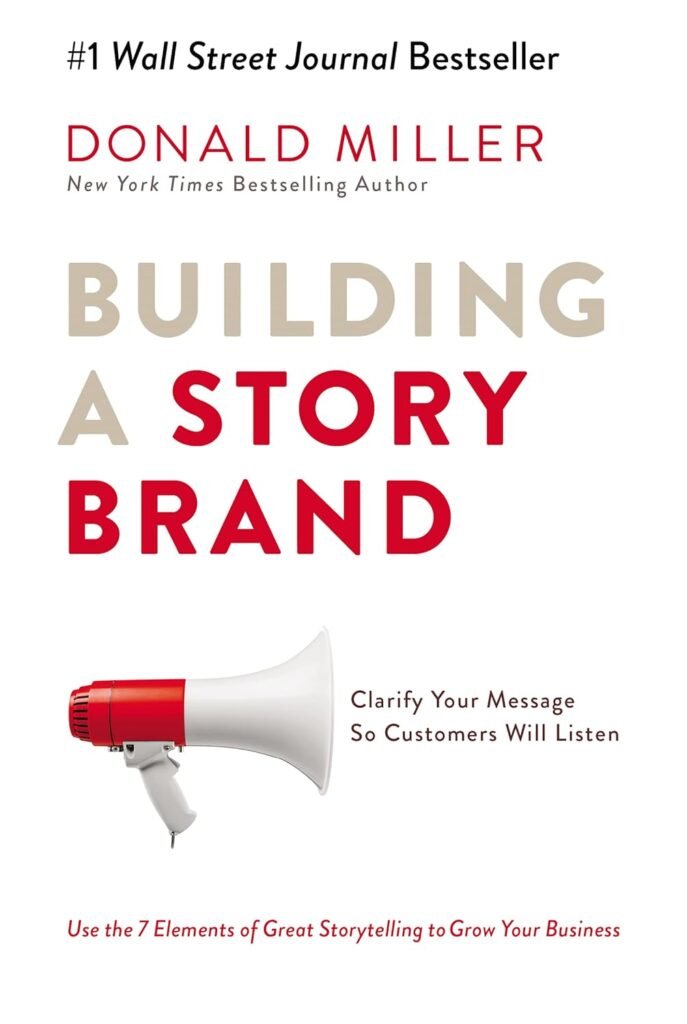
Clarify Your Message, Make Your Customer the Hero, and Grow Your Business Faster
📌 Overview: Why Building a StoryBrand Matters More Than Ever
In today’s noisy digital world, people don’t lack options — they lack clarity.
Websites shout.
Ads interrupt.
Brands talk endlessly about themselves.
And customers?
They scroll away.
This is exactly the problem Building a StoryBrand by Donald Miller solves.
The core idea of the book is deceptively simple but profoundly powerful:
Your customer is the hero of the story — not your brand.
Your brand’s role is not to be the star.
Your brand must be the guide who helps the hero win.
Donald Miller distills decades of storytelling wisdom into a 7-step messaging framework that helps businesses:
-
Cut through marketing noise
-
Capture attention in under 5 seconds
-
Increase conversions
-
Build trust
-
Grow revenue
This book is for:
-
Entrepreneurs & startup founders
-
Marketers & sales professionals
-
Coaches, consultants & creators
-
Anyone who wants customers to understand and buy faster
🧠 Why the Brain Loves Stories (and Hates Confusion)
The human brain is wired for survival, not analysis.
When customers visit your website, their brain instantly asks:
-
What is this?
-
Is it for me?
-
Will it help me survive, save time, or win?
-
What should I do next?
If the answer isn’t clear in 5 seconds, the brain checks out.
That’s why clarity beats creativity.
And storytelling beats explanation.
🔥 The StoryBrand Framework: 7 Steps That Turn Marketing into a Story
Donald Miller takes the timeless structure of every great story and applies it to business.
Let’s walk through each step — with real-life examples and practical tips.
1️⃣ A Character (Your Customer Is the Hero)
❌ The Mistake Most Brands Make
Most businesses position themselves as the hero:
-
“We are innovative”
-
“We are industry leaders”
-
“We have 20 years of experience”
Customers don’t care.
They care about their own story.
✅ The StoryBrand Rule
Your customer is the hero. Your brand is the guide.
The hero always wants something:
-
Save time
-
Make money
-
Avoid loss
-
Gain status
-
Improve relationships
-
Achieve self-actualization
📌 Practical Tip
Clearly answer on your homepage:
-
Who is this for?
-
What do they want?
Example
“We help busy entrepreneurs get clear marketing messages that convert.”
2️⃣ The Hero Has a Problem
Every story has tension.
No problem = no story.
Three Levels of Problems
🔹 External Problem
A visible, practical issue
“My website isn’t converting.”
🔹 Internal Problem
How the problem makes them feel
“I feel confused and frustrated.”
🔹 Philosophical Problem
Why this problem shouldn’t exist
“Marketing shouldn’t be this complicated.”
📌 Practical Tip
Clearly name all three problems in your messaging.
Example
“You shouldn’t lose customers just because your message is unclear.”
3️⃣ They Meet a Guide (Your Brand)
Heroes don’t save themselves.
They meet a guide.
Your brand must show:
-
Empathy → “We understand your struggle.”
-
Authority → “We’ve helped others win.”
❌ Don’t Brag
✅ Demonstrate
📌 Practical Tip
Use:
-
Testimonials
-
Case studies
-
Social proof
-
Certifications
Example
“We’ve helped 500+ businesses clarify their message and grow sales.”
4️⃣ The Guide Gives Them a Plan
A confused customer doesn’t act.
A simple plan removes fear.
Two Types of Plans
🔹 Process Plan
Simple steps to get started:
-
Book a call
-
Get a custom plan
-
Launch with clarity
🔹 Agreement Plan
Reduces risk:
-
Money-back guarantee
-
Free trial
-
No obligation
📌 Practical Tip
Make your plan visual and simple.
5️⃣ Call Them to Action
If you don’t invite customers to act, they won’t.
Two Types of CTAs
🔥 Direct CTA
-
Buy Now
-
Book a Call
-
Register Today
🌱 Transitional CTA
-
Download Guide
-
Watch Video
-
Read Blog
📌 Practical Tip
Your CTA should be:
-
Clear
-
Visible
-
Repeated
6️⃣ Help Them Avoid Failure
Fear motivates faster than pleasure.
Customers must see what happens if they don’t act.
But don’t scare — clarify.
Examples
-
Lost time
-
Missed opportunities
-
Continued confusion
-
Financial loss
📌 Practical Tip
Gently highlight the cost of inaction.
7️⃣ End in Success
Every story ends with transformation.
Show customers what life looks like after success.
Three Types of Success
-
External – More sales, better health
-
Internal – Confidence, clarity
-
Philosophical – Becoming who they were meant to be
📌 Practical Tip
Paint the picture of success visually and emotionally.
🌍 Real-Life Example #1: Apple’s “Think Different”
Apple didn’t say:
“We make computers.”
They said:
“Think Different.”
They positioned the customer as:
-
Creative
-
Innovative
-
Rebellious
Apple became the guide, not the hero.
Result?
One of the most powerful brands in history.
🌍 Real-Life Example #2: A Small Photography Business
Old Message:
“We offer professional photography services.”
New StoryBrand Message:
“We help parents capture beautiful memories so they never miss a moment.”
Result:
-
Clear positioning
-
Higher referrals
-
Emotional connection
🛠️ Action Plan: Apply StoryBrand in 7 Simple Steps
-
Identify your customer
-
Define their core problem
-
Position yourself as the guide
-
Create a simple plan
-
Add a clear CTA
-
Show what failure looks like
-
Show what success feels like
📋 Step-by-Step Guide for Your Website
-
Homepage headline: Customer-focused
-
Subheadline: Problem + solution
-
Testimonial near CTA
-
Simple 3-step plan
-
Clear CTA button
-
Success imagery
📘 Biggest Lessons from Building a StoryBrand
-
Clarity beats creativity
-
Customers don’t want information — they want transformation
-
Confusion is the #1 reason people don’t buy
-
Stories activate the brain
-
Simplicity increases sales
-
Your brand is not the hero
-
Messaging should pass the 5-second test
🔟 Top 10 Takeaways from Building a StoryBrand
-
Make the customer the hero
-
Clarify the problem clearly
-
Be the guide, not the star
-
Use storytelling structure
-
Create simple plans
-
Call customers to action
-
Highlight consequences
-
Show success visually
-
Simplify your message
-
Story sells better than feature