Why Sprint Matters and Who This Book Is For
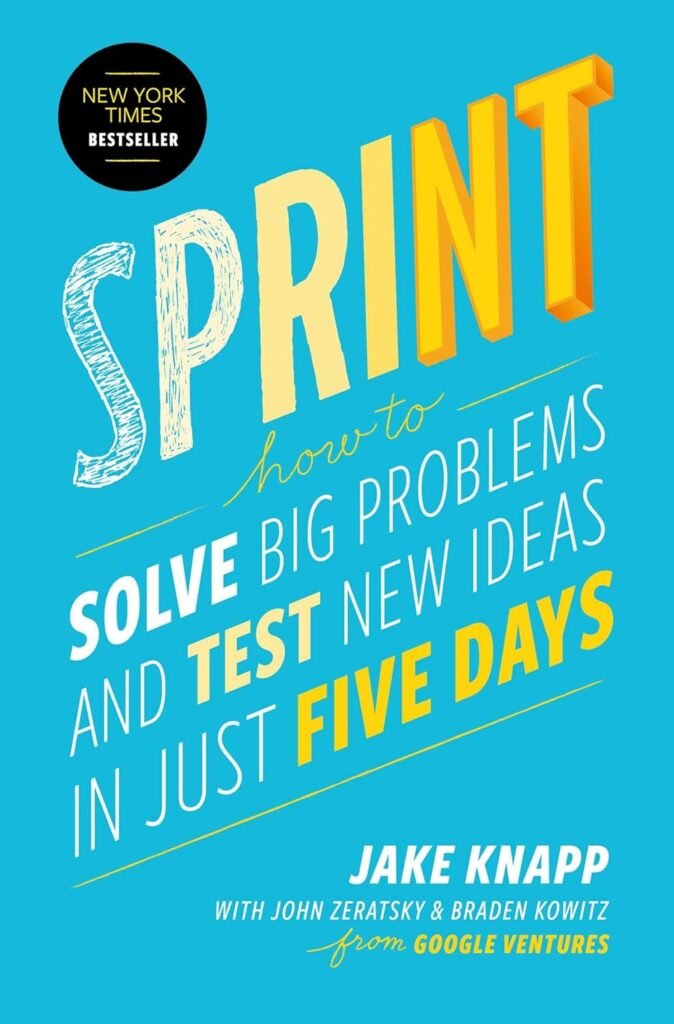
In a world where startups fail fast, marketing campaigns flop, and product ideas consume months of effort with uncertain outcomes, Sprint by Jake Knapp arrives as a practical survival guide.
Written by Jake Knapp, the inventor of the Design Sprint at Google Ventures, Sprint introduces a proven five‑day framework to solve big problems, test new ideas, and reduce risk — without wasting months of time and money. The methodology has been used by Google, Microsoft, Airbnb, Slack, and hundreds of startups worldwide.
The core promise of the book is crystal clear: solve critical business questions and test ideas in just five focused days instead of endless meetings and debates.
This book is ideal for:
Entrepreneurs and startup founders
Product managers and UX designers
Sales and marketing teams
Social media brand builders
Anyone in self‑growth and personal development looking for faster decision‑making
Sprint is not about theory. It is about execution.
The Big Idea of Sprint by Jake Knapp
At its heart, Sprint answers one powerful question:
“How can we reduce uncertainty and test important ideas quickly before committing massive resources?”
Instead of guessing what customers want, Sprint forces teams to prototype quickly and test with real users. Your notes clearly highlight that uncertainty is highest at the beginning of any product, service, or campaign — and Sprint is designed to attack that uncertainty first.
The 5‑Day Sprint Framework (Deep Dive)
Day 1 – Monday: Understand & Map the Problem
The Sprint begins by identifying the biggest risk or uncertainty.
According to your notes, this is the stage where teams:
Define long‑term goals
Identify potential risks and unknowns
Understand customer journeys
Ask critical questions like:
What could go wrong?
What happens if this fails?
For example, a startup launching a new app might ask:
“Will users understand the core value in the first 30 seconds?”
Practical Tip: Don’t try to solve everything. Focus only on the most dangerous assumption.
Day 2 – Tuesday: Sketch Solutions
Tuesday is about ideas — but not chaotic brainstorming.
Your notes emphasize structured sketching, where everyone works silently to avoid bias and groupthink .
Key elements:
Review existing solutions and competitors
Sketch multiple approaches individually
Focus on clarity, not artistic quality
Why this works: Quiet thinking produces better ideas than loud meetings.
Day 3 – Wednesday: Decide & Storyboard
On Wednesday, the team decides.
Instead of endless debates, Sprint uses:
Sticky‑note voting
Heat maps
A clear decision maker
Your notes highlight that the strongest idea is converted into a step‑by‑step storyboard — like a movie script of the customer experience.
Practical Tip: Speed beats perfection. Decisions create momentum.
Day 4 – Thursday: Build a Realistic Prototype
Thursday is execution day.
The goal is not to build a perfect product, but a realistic prototype that feels real to customers.
From your handwritten summary:
No code (if possible)
Use mockups, landing pages, brochures, demos
Make it believable enough for testing.
Key mindset: “Fake it to learn it.”
Day 5 – Friday: Test with Real Customers
Friday is the moment of truth.
The prototype is tested with real users, while the team observes silently.
Your notes stress:
Ask open‑ended questions
Observe reactions, not opinions
Look for patterns, not compliments .
This day alone can save months of wasted effort.
Two Real‑Life Examples of Sprint in Action
Example 1: Startup Product Validation
A fintech startup wanted to build a budgeting app. Instead of coding for six months, they ran a Sprint.
Within five days, customer testing revealed users cared more about automated alerts than budgeting charts. The product pivoted early — saving money and accelerating growth.
Example 2: Sales & Marketing Campaign Sprint
A marketing agency used Sprint to test a new social media brand‑building service. The prototype was a simple landing page and pitch deck.
Customer feedback reshaped the offer, doubled conversions, and reduced sales cycle time.
Action Plan: How You Can Apply Sprint in Real Life
Step 1: Identify Your Biggest Uncertainty
Is it customer demand? Pricing? Messaging?
Step 2: Block 5 Focused Days
No distractions. No meetings.
Step 3: Follow the Sprint Structure
Trust the process.
Step 4: Test Before You Invest
Feedback first. Scale later.
Lessons Learned from Sprint by Jake Knapp
Speed creates clarity
Opinions don’t matter — evidence does
Small tests beat big launches
Focus beats multitasking
Customers reveal truth faster than meetings
Step‑by‑Step Sprint Implementation Guide
Pick one big problem
Build the right team
Map the challenge
Sketch solutions
Decide quickly
Prototype fast
Test with real users
Learn and iterate
10 Key Takeaways from Sprint
Solve big problems in 5 days
Reduce risk early
Test before building
Silence improves creativity
Decisions beat discussions
Prototypes save money
Customers are the best judges
Speed is a competitive advantage
Focused teams win
Learning fast equals winning fast
Call to Action
Big ideas don’t fail because they’re bad — they fail because they’re tested too late.
Apply the Sprint framework in your business, career, or personal projects. Test faster. Learn quicker. Decide smarter.
If this summary helped you, take the next step — run your own Sprint and experience clarity in just five days