(How to stop chasing fake validation and start building real businesses)
✅ Overview – Why The MOM Test Matters and Who It’s For
In the startup world, most businesses don’t fail because their founders are lazy or untalented. They fail because they build something nobody actually wants. The problem isn’t effort. The problem is false validation.
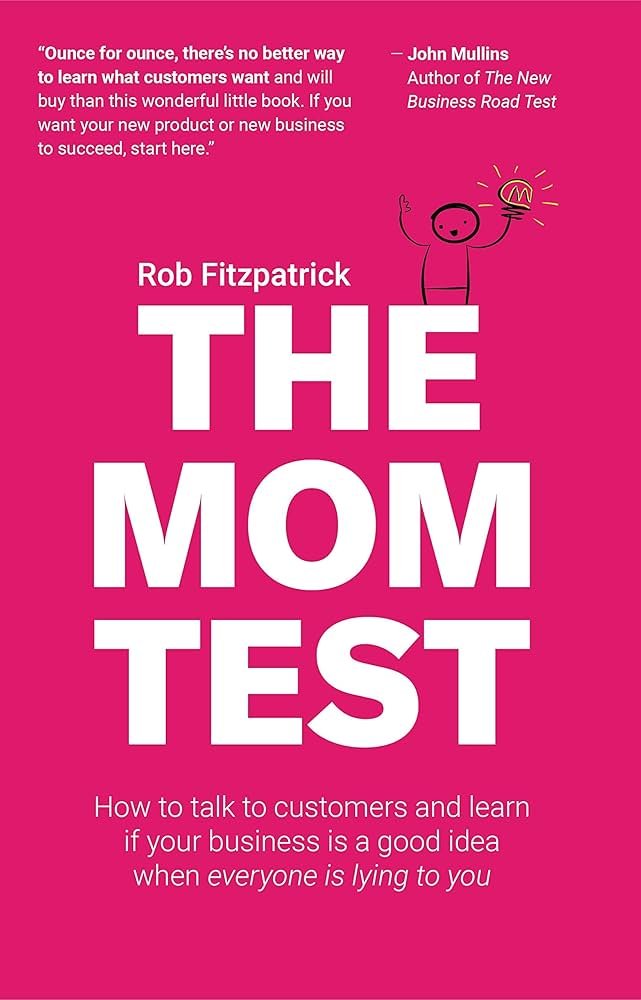
That is exactly what The MOM Test by Rob Fitzpatrick attacks, head-on.
This book is for:
-
Startup founders
-
Entrepreneurs
-
Freelancers launching new offers
-
Digital creators
-
Product managers
-
Side-hustlers
-
Anyone testing a business idea
Its core message is simple yet uncomfortable:
“Your mom will lie to you. So will your friends. So will your customers—unless you ask the right questions.”
The book teaches how to:
-
Ask questions that reveal real problems
-
Distinguish real demand from polite encouragement
-
Avoid wasting time building products nobody needs
-
Validate your idea before you build it
It’s not about pitching better.
It’s about listening better.
✅ Key Concepts & Steps – Deep Dive with Real-Life Examples
✅ Concept 1: Talk About Their Life, Not Your Idea
The biggest mistake founders make is this:
“I have an idea. Do you think it’s good?”
This question is designed to fail.
People don’t want to hurt your feelings. So they lie politely.
❌ Bad Question:
“Would you buy my online fitness app?”
✅ MOM-Test Question:
“Tell me about the last time you struggled to stay consistent with workouts.”
Why this works:
-
You learn about real behavior
-
You learn about past pain
-
You learn if the problem is severe enough to solve
🎯 Real-Life Example 1:
A Bangalore-based startup pitched an AI study planner. Everyone said, “Great idea!” But after using MOM Test interviews, they realized students were already solving the problem using WhatsApp groups and Notion templates. The startup pivoted and built a content-based micro-learning platform instead—and gained 40,000 users in 12 months.
✅ Concept 2: Compliments, Fluff & Idea Talk Are Dangerous
These three things destroy real learning:
-
Compliments – “That’s amazing!”
-
Fluff – Vague encouragement
-
Ideas – “You should also add this feature…”
None of these means people will:
-
Pay
-
Switch
-
Change behavior
Instead, you must anchor your questions in real actions.
✅ Strong MOM-Test Question:
“How are you solving this problem right now?”
If they aren’t already trying to solve it, it’s probably not painful enough.
✅ Concept 3: Ask About the Past, Not the Future
People are terrible at predicting their future behavior.
They will say:
-
“I will buy.”
-
“I will definitely use it.”
-
“Sounds useful.”
But what matters is:
✅ What they already did
✅ What they already paid for
✅ What they already tried
🎯 Real-Life Example 2:
A SaaS founder in Texas built a CRM tool after customers “promised” they’d subscribe. After launch: zero paying users.
When he restarted using MOM Test interviews, he found out:
-
Businesses were solving the problem with Excel
-
The pain wasn’t big enough to switch
He pivoted into an Excel automation tool, and his MRR crossed $12,000/month within one year.
✅ Concept 4: Talk Less, Listen More
Founders love to talk.
But talking kills learning.
The MOM Test demands:
-
Ask short questions
-
Let people ramble
-
Dig deeper into behaviors
-
Stay quiet
Your job is not to impress.
Your job is to discover truth.
✅ Concept 5: Never Ask for Opinions About Your Startup
Never ask:
-
“Would you use this?”
-
“Do you think it’s useful?”
-
“Should I build this?”
Ask:
-
“How are you handling this now?”
-
“What frustrated you most last time?”
-
“How much time/money did it cost you?”
✅ The 3 Golden Rules of The MOM Test
-
Talk about their life instead of your idea
-
Ask about specifics in the past, not opinions about the future
-
Talk less and listen more
If you follow just these three rules, you instantly rise above 90% of founders.
✅ Action Plan – How to Apply The MOM Test in Real Life
Here’s a real-world, step-by-step plan:
Step 1: Define Your Customer Segment
Example:
-
Gym owners
-
Stock traders
-
College students
-
HR managers
Step 2: Prepare 5 MOM-Test Questions
-
When did you last experience this problem?
-
What did you try to fix it?
-
What failed?
-
How much time/money did it cost?
-
What annoyed you most?
Step 3: Conduct 10–15 Interviews
No pitching. Just listening.
Step 4: Identify Patterns
-
Same complaints?
-
Same hacks?
-
Same frustrations?
That’s your product direction.
✅ Lessons Learned – Biggest Takeaways from the Book
-
Everyone lies politely
-
Good questions reveal ugly truth
-
Real pain beats exciting ideas
-
Opinions don’t make money—behavior does
-
Talking kills learning
-
Selling too early destroys trust
-
Validation is about facts, not encouragement
-
Customers don’t care about your passion
-
Data beats ego
-
Learning fast beats building fast
✅ Step-by-Step Guide to Passing the MOM Test
-
Don’t pitch your idea
-
Ask about recent problems
-
Focus on their workflow
-
Look for money/time loss
-
Track emotional frustration
-
Avoid yes/no questions
-
Push for real stories
-
Don’t mention features
-
Avoid future promises
-
Look for purchasing behavior
✅ 10 Powerful Takeaways from The MOM Test
-
Compliments are dangerous
-
Opinions are worthless
-
Past behavior predicts future action
-
“Would you buy?” is a trap
-
Early validation saves years
-
Good ideas still fail without market need
-
Your mom is your worst validator
-
Talking less gives more insight
-
Learning beats guessing
-
Customer truth is uncomfortable—but profitable
✅ Final Summary
The MOM Test is not a motivational book.
It is a practical reality-check manual for entrepreneurs.
It teaches that:
-
Ideas don’t matter
-
Feedback lies
-
Customers don’t predict
-
Only behavior reveals truth
If you master The MOM Test early in your journey, you will:
✅ Avoid bad businesses
✅ Save capital
✅ Save years of frustration
✅ Build products people actually want
✅ Increase your odds of success exponentially
✅ Call to Action
Inspired by the lessons of The MOM Test by Rob Fitzpatrick?
✅ Start applying these questions in your next business idea
✅ Interview 10 real people this week
✅ Stop seeking encouragement—start seeking truth
This is just one powerful insight from our Book to Life Series.
✅ Disclaimer
This content is for educational purposes only. The book concepts are summarized and interpreted to help readers apply business principles in real life. Any examples mentioned are purely illustrative.