How to Validate Your Business Idea, Avoid Costly Mistakes, and Build a Business That Actually Takes Off
Why Will It Fly? Matters More Than Ever 🚀
Most businesses don’t fail because founders lack passion.
They fail because the idea was never tested properly.
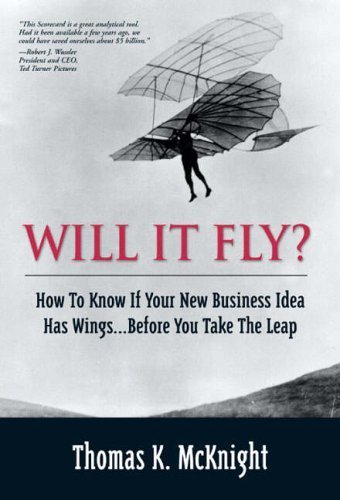
Will It Fly? by Thomas K. McKnight (popularized widely by entrepreneur Pat Flynn) is not a book about dreaming big — it’s a book about testing smart. It teaches you how to validate your business idea before you invest years of time, energy, and money into something that may never work.
In an age of Instagram entrepreneurship, side hustles, and startup hype, this book is a reality check. It’s for:
-
Aspiring entrepreneurs
-
Side hustlers
-
Solopreneurs
-
Creators & coaches
-
Anyone asking: “Is this business idea actually worth pursuing?”
The core promise of the book is simple but powerful:
Don’t build first. Test first.
What Is Will It Fly? Really About?
At its heart, Will It Fly? is a framework for clarity.
A startup is not about guessing.
A startup is a series of tested assumptions.
This book gives you a step-by-step system to answer one crucial question:
“Will this business idea support the life I want — financially, emotionally, and personally?”
Instead of chasing shiny ideas, McKnight focuses on:
-
Lifestyle alignment
-
Real customer problems
-
Validation before execution
The Core Framework of Will It Fly?
The book breaks idea validation into three powerful phases:
-
The Mission Test
-
The Market Tests
-
The Development & Validation Tests
Let’s explore each one deeply — with practical examples.
1️⃣ The Mission Test: Does This Idea Fit Your Life?
Before market research, before sales, before branding — the book asks a rare but critical question:
👉 “What kind of life do you actually want?”
Why This Matters
Many people build businesses they later hate:
-
Too much stress
-
No time freedom
-
Poor health
-
Burnout
The Mission Test forces you to define success before building anything.
The Future Self Exercise 🧠
You are asked to imagine your life 3–5 years from now and answer questions like:
-
How much money do I want to earn?
-
How many hours do I want to work weekly?
-
What does my ideal day look like?
-
What do I value most — freedom, stability, impact?
From your handwritten notes (pages 3–4), the book suggests dividing life goals into categories:
| Area | Examples |
|---|---|
| Health | Energy, fitness, mental peace |
| Wealth | Monthly income, savings |
| Happiness | Family time, freedom |
| Lifestyle | Travel, flexibility |
💡 Key Insight:
A business that doesn’t match your life goals will eventually feel like a prison.
Real-Life Example #1: Freelance Designer Burnout
A freelance designer wanted to start an agency.
Mission Test revealed:
-
He valued freedom
-
Hated managing people
Instead of an agency, he built a productized service.
Result: Higher income, fewer hours, zero burnout.
2️⃣ The Market Tests: Will Anyone Actually Pay?
Once your idea aligns with your life, the next question is brutal but honest:
Does the market care?
The Three Market Tests from Will It Fly?
✅ Test #1: The History Test 📜
Has this problem existed before?
If people have already spent money solving this problem, it’s a green signal.
From your notes (page 4), examples include:
-
Accounting services
-
Online education
-
Fitness programs
💡 If competitors exist, it’s good news — it proves demand.
✅ Test #2: The Shake-Bait Test 🪤
This test asks:
-
Why should someone choose you?
-
What makes your solution different?
-
What unfair advantage do you have?
Your notes (pages 5–6) highlight:
-
Skills
-
Experience
-
Perspective
-
Access to audience
Example:
Two chocolate brands:
-
One sells “chocolate”
-
One sells “single-origin, ethical, dark chocolate for fitness lovers”
Same product. Different positioning.
Real-Life Example #2: Online Course Creator
A creator wanted to sell a general productivity course.
After Shake-Bait Test, they narrowed it to:
“Productivity for working parents with kids under 5”
Sales increased instantly.
✅ Test #3: The P.L.A.N. Framework 🧩
From your handwritten summary (pages 13–18), this is one of the most powerful tools in the book.
P.L.A.N. stands for:
-
P – Problems
What keeps your audience awake at night? -
L – Language
Use their words, not marketing jargon. -
A – Anecdotes
Stories people already share about their struggle. -
N – Needs
What outcome do they actually want?
💡 This ensures you are solving a real problem, not an imagined one.
3️⃣ The Development Phase: Build Less, Test More 🧪
Once your idea passes the Mission and Market Tests, the book warns:
Do NOT build the full product yet.
Instead, validate with minimum effort.
Step-by-Step Validation Process
From your notes (pages 8–10):
-
Talk to 10 real people
-
Ask:
-
“What do you think of this idea?”
-
“Would you pay for this?”
-
-
Collect honest feedback
-
Adjust positioning
-
Repeat
The Pre-Sell Test 💰
One of the strongest ideas in Will It Fly?:
If people won’t buy before it exists, they won’t buy after.
Examples:
-
Sell coaching before creating the program
-
Pre-sell a course with just a landing page
-
Offer beta access
💡 Pre-selling is not manipulation — it’s validation.
Lessons Learned from Will It Fly?
🔑 Big Takeaways
-
Passion without validation is dangerous
-
Your business should serve your life — not consume it
-
Competition proves demand
-
Clarity beats complexity
-
Language matters more than features
-
Validation saves years of effort
-
Failure early is success in disguise
-
Pre-selling is confidence, not greed
-
Simplicity scales faster
-
Execution without clarity is chaos
Action Plan: How You Can Apply This Today
Week 1: Mission Clarity
-
Write your ideal life vision
-
Define income + lifestyle goals
Week 2: Market Research
-
Study competitors
-
Identify real customer pain points
Week 3: Validation
-
Talk to 10 people
-
Test pricing
-
Pre-sell a solution
Week 4: Decide
-
Proceed
-
Pivot
-
Or pause (with confidence)
Step-by-Step Guide (Quick Reference)
-
Define your life goals
-
Align business idea with lifestyle
-
Test market history
-
Identify differentiation
-
Use P.L.A.N. framework
-
Talk to real people
-
Pre-sell before building
-
Iterate based on feedback
-
Build MVP only after validation
-
Scale with clarity
Why Will It Fly? Is a Must-Read for Entrepreneurs
This book doesn’t hype entrepreneurship.
It respects your time, money, and energy.
It teaches you to:
-
Think clearly
-
Test honestly
-
Build confidently
If more founders followed this process, most startup failures would never happen.
Final Call to Action 🎯
If you’re sitting on a business idea and asking yourself:
“Will this actually work?”
Then Will It Fly? is not optional — it’s essential.
👉 Read the book.
👉 Test before you build.
👉 Design a business that supports your life — not steals it.
This is just one powerful insight from our Book to Life series — where books don’t stay on shelves, they turn into action