Why “The Effective Executive” Still Matters Today
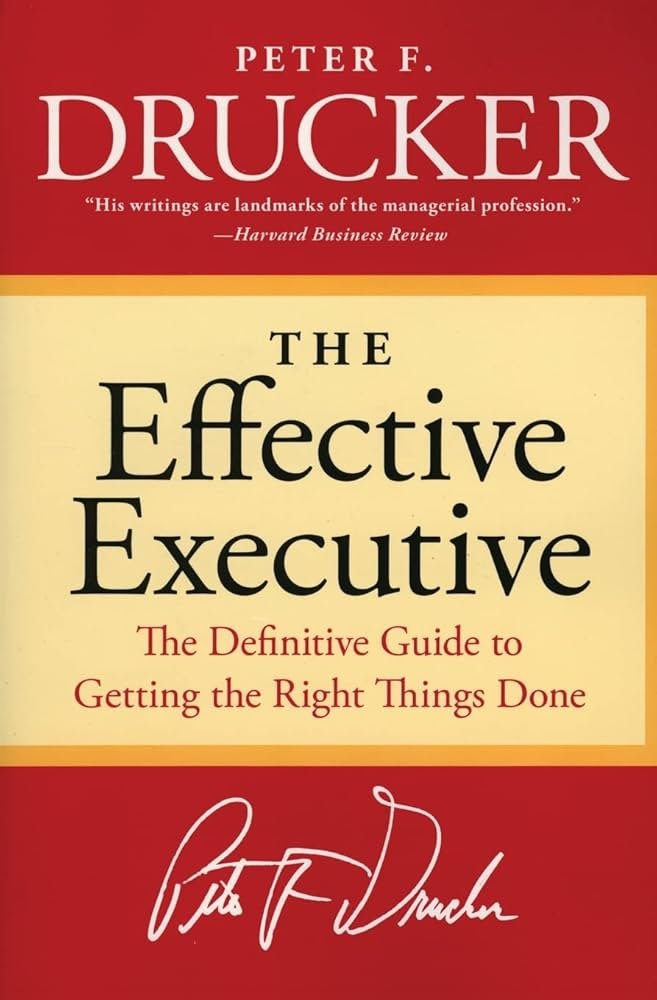
In a world where everyone is busy but very few are truly productive, the book The Effective Executive by Peter Drucker stands as a timeless guide to achieving real results.
Drucker doesn’t teach you how to work harder — he teaches you how to work smarter, focus on results, and become effective in what truly matters.
This book is not just for CEOs or managers. It is for:
- Entrepreneurs building startups
- Professionals managing careers
- Business owners scaling operations
- Anyone who wants clarity, productivity, and success strategies:
👉 “Effectiveness means getting the right things done.”
And that is the core of this entire book.
Key Concepts: 5 Powerful Practices of Effective Executives
Drucker explains that effectiveness is not talent — it is a learnable habit. Let’s break down the 5 core principles.
1. Know Where Your Time Goes (Time Management Mastery)
- Record your time
- Analyze your time
- Eliminate time-wasting activities
Why This Matters
Time is your most valuable and limited resource. If you don’t manage it, nothing else can be managed.
Practical Tips
- Track your time for 2 weeks
- Identify low-value tasks
- Remove unnecessary meetings
- Delegate routine work
Real-Life Example
A startup founder was working 14 hours daily but seeing no growth. After tracking time:
- 40% time = unnecessary meetings
- 30% = low-value admin work
After eliminating these:
👉 Revenue doubled in 6 months
2. Focus on Contribution, Not Effort
👉 “What can I contribute?”
Key Insight
Most people ask:
❌ What is my job?
❌ What tasks should I do?
Effective executives ask:
✅ What results can I create?
Practical Application
- Focus on outcomes, not activities
- Think: “How does my work impact the business?”
- Align your work with company goals
Example
A marketing executive stopped posting random social media content and focused on:
👉 Lead generation campaigns
Result:
👉 3X increase in conversions
3. Build on Strengths (Your Biggest Advantage)
👉 Focus on strengths, not weaknesses
Why This Is Powerful
Weakness improvement gives average results
Strength focus creates extraordinary results
Practical Tips
- Identify your top 3 strengths
- Assign tasks based on strengths
- Hire people for your weaknesses
Example
A business owner:
- Weak in operations
- Strong in sales
Instead of fixing operations:
👉 He hired an operations manager
Result:
👉 Business scaled from ₹10L to ₹1Cr
4. First Things First (Priority Mastery)
👉 Do one important thing at a time
Core Principle
Multitasking kills productivity.
Focus creates results.
Rules
- Identify the most important task
- Do it first
- Avoid distractions
Practical Strategy
Use this daily:
- Write 3 priorities
- Complete 1 before moving to next
- Avoid urgency traps
Example
An entrepreneur stopped juggling 10 tasks and focused on:
👉 Customer acquisition
Result:
👉 Business growth accelerated
5. Make Effective Decisions (The Ultimate Skill)
Drucker outlines a decision-making process:
Decision Steps
- Identify the problem
- Define objectives
- Evaluate alternatives
- Choose best solution
- Take action & follow-up
Key Insight
Good decisions are:
- Systematic
- Logical
- Based on facts
Example
A startup founder avoided impulsive decisions and started:
👉 Using structured decision frameworks
Result:
👉 Reduced business losses by 40%
Action Plan: How to Apply This Book in Real Life
Here’s a simple execution plan:
Step 1: Track Your Time (7 Days)
- Write everything you do
- Identify time waste
Step 2: Eliminate Low-Value Work
- Remove unnecessary tasks
- Delegate repetitive work
Step 3: Focus on Strengths
- List your strengths
- Align work accordingly
Step 4: Set Daily Priorities
- 3 important tasks per day
- Complete 1 at a time
Step 5: Improve Decision Making
- Use structured thinking
- Avoid emotional decisions
Lessons Learned from The Effective Executive
- Being busy ≠ being productive
- Time is your most valuable asset
- Focus on results, not effort
- Strengths create success
- Prioritization is power
- Decision-making defines leaders
- Eliminate unnecessary work
- Effectiveness is a habit
- Clarity leads to performance
- Discipline creates success
Step-by-Step Implementation Guide
Daily Routine
- Morning: Identify 3 priorities
- Work: Focus on one task
- Evening: Review your output
Weekly Routine
- Analyze time usage
- Remove low-value activities
Monthly Routine
- Evaluate results
- Improve strategy
Two Real-Life Success Stories
1. Corporate Manager Turned Leader
A manager struggling with overload started:
- Delegating tasks
- Focusing on strengths
👉 Promotion within 1 year
2. Startup Founder Scaling Business
Founder used Drucker’s principles:
- Focus on key metrics
- Eliminate distractions
👉 Startup scaled 5X in 12 months
10 Key Takeaways from The Effective Executive
- Effectiveness is learnable
- Time management is critical
- Focus on contribution
- Build on strengths
- Prioritize important tasks
- Avoid multitasking
- Make structured decisions
- Delegate effectively
- Eliminate time-wasters
- Results matter more than effort
Final Thoughts (Powerful Insight)
The biggest lesson from this book is simple but powerful:
👉 “You don’t need more time. You need more effectiveness.”
Most people try to do more.
But successful people do what matters most.
Call to Action
If this blog inspired you, don’t just read it — apply it.
Start today:
- Track your time
- Focus on one important task
- Build on your strengths
👉 Your transformation begins with small disciplined actions.
Want more such powerful transformations?
Explore my Book to Life series and start turning knowledge into real success.