
Book Summary | Investment Lessons | Personal Finance | Wealth Building | Book to Life
What if successful investing is not about finding the next multibagger stock, predicting the next market crash, or discovering the perfect time to enter the market?
What if successful investing is built on four foundations?
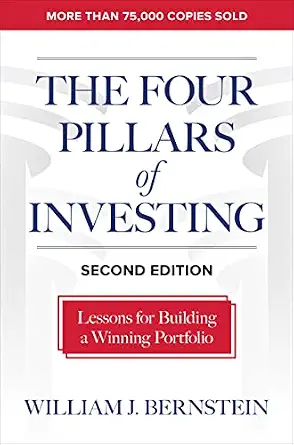
That is the central idea behind The Four Pillars of Investing by William J. Bernstein. Your handwritten notes describe the book as a guide to building a strong investment portfolio and highlight four major pillars: Investment Theory, Investment History, Investment Psychology, and the Business of Investing.
These four pillars create a useful framework for understanding not only what to invest in, but also why markets behave as they do, how investors make mistakes, and why the investment industry itself can influence your results.
This is not a story about becoming rich overnight.
It is a story about learning how to build wealth patiently.
📖 Why The Four Pillars of Investing Matters
Imagine two investors.
The first spends hours every day searching for the next winning stock. He watches financial television, follows market predictions and constantly changes his portfolio.
The second investor understands asset allocation, studies market history, understands his own emotional weaknesses and pays attention to investment costs.
Who is more likely to build a durable portfolio over several decades?
Bernstein’s framework suggests that successful investing requires much more than picking investments.
the book as a comprehensive guide to long-term investment strategy, focusing on the principles behind successful investing.
The four pillars are:
- The Theory of Investing
- The History of Investing
- The Psychology of Investing
- The Business of Investing
Together, they provide a framework for making more rational investment decisions.
Pillar 1: The Theory of Investing
The first pillar begins with an uncomfortable truth:
You cannot build a good investment strategy without understanding risk and return.
Many investors begin with a much simpler question:
“Which investment will make me the most money?”
Bernstein’s framework encourages a better question:
“What level of risk am I willing and able to accept in pursuit of long-term returns?”
highlight the importance of understanding investment theory and concepts such as risk, return, diversification, and the efficient market hypothesis.
These ideas form the foundation of portfolio construction.
Risk and Return: The Investment Trade-Off
Investments don’t provide high expected returns without accepting some level of uncertainty.
A bank deposit and a stock portfolio do not carry the same risk.
A government bond and a small company stock do not behave the same way.
Real estate and equities have different characteristics.
The notes emphasize the importance of understanding these differences when making investment decisions.
The lesson is simple:
Don’t chase return without understanding the risk required to achieve it.
Practical Lesson
Before choosing an investment, ask:
- What return am I expecting?
- What risks am I taking?
- Can I tolerate a major decline?
- How long can I stay invested?
- Does this investment fit my overall portfolio?
Diversification: Don’t Put Your Financial Future in One Basket
One of the most important ideas in the notes is diversification.
Imagine putting your entire portfolio into one company.
If the company performs brilliantly, you may become very wealthy.
But if something goes wrong, your financial future can be seriously damaged.
Diversification reduces dependence on a single investment.
specifically discuss diversification across assets and warn against concentrating too heavily in one security.
This is one reason asset allocation becomes so important.
Asset Allocation: The First Major Investment Decision
describe asset allocation, market timing, security selection and investment behavior as key components of successful investing.
Asset allocation essentially asks:
How should your portfolio be divided among different types of assets?
For example, an investor might have exposure to:
- Equities
- Bonds
- Real estate
- International markets
- Other appropriate asset classes
The exact allocation depends on the investor’s goals, risk tolerance, time horizon and circumstances.
The important point is that portfolio construction should come before obsessing over individual investments.
Pillar 2: The History of Investing
If theory explains how markets work, history teaches us what markets have actually done.
This is where Bernstein’s second pillar becomes powerful.
The handwritten notes use historical market data and charts to demonstrate the importance of understanding long-term investment performance and market fluctuations.
History teaches investors one important lesson:
Markets do not move in straight lines.
There are periods of tremendous growth.
There are crashes.
There are long periods of disappointment.
There are bubbles.
There are recoveries.
And sometimes, the biggest opportunities appear when investors are most frightened.
The Problem With Predicting the Market
Imagine an investor in 2008.
Markets are falling.
Every newspaper headline seems frightening.
Fear dominates the conversation.
The investor sells everything.
A few years later, markets recover.
Now the investor faces another problem:
When should I get back in?
This is the trap of market timing.
The handwritten notes specifically emphasize that market history shows investors how difficult it is to predict markets consistently and why historical perspective matters for long-term investing.
The lesson isn’t that markets never fall.
They do.
The lesson is that short-term predictions are extraordinarily difficult.
History Shows Why Patience Matters
The notes contain historical charts showing long-term investment returns and market behavior.
This leads to an important insight.
An investor looking at a single year can become extremely emotional.
An investor looking at several decades can see something different.
Short-term volatility can look terrifying.
Long-term investing provides perspective.
That doesn’t eliminate risk.
It simply changes how you interpret it.
Practical Lesson
When markets fall, don’t ask only:
“How much have I lost today?”
Ask:
“Has my long-term financial plan fundamentally changed?”
Pillar 3: The Psychology of Investing
This may be the most difficult pillar.
Why?
Because investing is not purely mathematical.
It is emotional.
identify behavioral biases and explain how emotions can affect investment decisions. They specifically mention ideas such as loss aversion, overconfidence and behavioral biases.
An investor can understand diversification perfectly and still panic when the market crashes.
That is the psychological challenge.
Loss Aversion: Why Losses Feel So Painful
Suppose you invest ₹10 lakh.
Your portfolio rises to ₹12 lakh.
You feel good.
Then the market falls and your portfolio drops back to ₹10 lakh.
Technically, you’re back where you started.
Emotionally, it can feel like you have lost something.
Why?
Because human beings often experience losses more intensely than equivalent gains.
This can lead investors to sell at precisely the wrong moment.
The notes emphasize the psychological reality of loss aversion and its influence on investment behavior.
Overconfidence: The Investor Who Thinks He Knows More Than the Market
Another danger is overconfidence.
An investor makes three successful stock picks.
Suddenly, he believes he has exceptional market insight.
He begins taking larger risks.
He concentrates his portfolio.
He starts trading more frequently.
Eventually, one major mistake can erase years of progress.
The lesson:
A few successful decisions do not prove that you can consistently predict the future.
The handwritten notes specifically identify overconfidence as one of the psychological challenges investors need to understand.
The Investor’s Biggest Enemy Can Be the Investor
This is one of the most powerful lessons from the book’s psychology pillar.
You can have:
- a good portfolio
- low-cost investments
- diversification
- a long-term plan
…and still damage your results by constantly interfering with your own strategy.
You buy because prices are rising.
You sell because prices are falling.
You chase yesterday’s winners.
You abandon your plan.
You constantly check your portfolio.
The notes encourage investors to understand their own behavior and avoid making emotional decisions based on market noise.
Pillar 4: The Business of Investing
The fourth pillar is particularly interesting because it asks us to look beyond markets.
It asks:
Who makes money from your investing activity?
The investment industry contains:
- brokers
- fund managers
- financial advisers
- product providers
- platforms
- other financial intermediaries
the business of investing, including the role of financial advisers, brokers and fees.
Understanding this business is important because investment costs reduce the money available to compound for you.
Fees: The Silent Wealth Destroyer
Imagine two investors who earn exactly the same gross return.
Investor A pays very low investment costs.
Investor B pays substantially higher fees.
Over one year, the difference might appear small.
Over twenty or thirty years, the difference can become significant because the money paid in fees is money that is no longer compounding.
The notes repeatedly emphasize the importance of minimizing investment costs and understanding how fees affect long-term returns.
Practical Lesson
Whenever you invest, ask:
“How much does this investment cost me?”
Don’t look only at the expected return.
Look at the total cost.
Real-Life Example 1: Warren Buffett and the Power of Long-Term Thinking
mention Warren Buffett in the discussion of investment behavior and successful investing.
Buffett provides a useful real-world illustration of the broader principles in Bernstein’s framework.
His reputation is closely associated with long-term thinking, patience and avoiding unnecessary speculation.
The lesson for an ordinary investor isn’t to copy Buffett’s individual investments.
It is to understand the behavior behind long-term success:
Patience can be an investment advantage.
An ordinary investor doesn’t need to become Warren Buffett.
They can simply learn from the principle of resisting unnecessary activity.
Real-Life Example 2: John Bogle and Low-Cost Investing
Also mention John Bogle in the context of investment efficiency and long-term investing.
Bogle’s investment philosophy is especially relevant to Bernstein’s fourth pillar because it highlights the importance of keeping investment costs low.
The lesson is powerful:
You don’t necessarily need an elaborate portfolio filled with complicated products.
Sometimes simplicity, diversification, discipline and low costs can be extremely valuable.
Again, the goal isn’t to copy another investor blindly.
The goal is to understand the principle.
The Perfect Portfolio Does Not Exist
One of the most useful ideas in the notes appears in the section titled “The Perfect Portfolio.”
The notes emphasize that risk and reward are interconnected and that there is no single perfect portfolio that works for everyone.
This is an important distinction.
Your perfect portfolio is not necessarily your friend’s perfect portfolio.
A 25-year-old and a 60-year-old shouldn’t automatically have identical portfolios.
Someone saving for a goal ten years away has different needs from someone investing for retirement thirty years away.
Your portfolio should reflect:
- your goals
- your time horizon
- your risk tolerance
- your financial position
- your ability to remain invested
The Four Pillars Work Together
The real power of Bernstein’s framework isn’t found in studying each pillar separately.
It comes from combining them.
Theory tells you:
How investing works.
History tells you:
How markets have behaved.
Psychology tells you:
Why investors make mistakes.
The Business of Investing tells you:
How the investment industry can affect your returns.
Put all four together and you get a much more complete investment education.
A Step-by-Step Investment Action Plan
If you want to take the ideas from The Four Pillars of Investing and turn them into action, start here.
Step 1: Define Your Financial Goal
Ask:
Why am I investing?
Retirement?
Financial independence?
Children’s education?
A future purchase?
Wealth creation?
Your goal determines your time horizon.
Step 2: Understand Your Risk
Don’t simply ask how much return you want.
Ask how much volatility you can realistically tolerate.
The notes emphasize understanding risk before making investment decisions.
Step 3: Build an Asset Allocation
Determine how your portfolio should be divided across appropriate asset classes.
Don’t start by asking:
“Which stock should I buy?”
Start by asking:
“What should my overall portfolio look like?”
Step 4: Diversify
Avoid unnecessary concentration.
Diversification is one of the central principles highlighted throughout the handwritten notes.
Step 5: Study Market History
Learn how markets behaved during:
- booms
- crashes
- recessions
- recoveries
- periods of inflation
- periods of economic uncertainty
History won’t tell you exactly what happens tomorrow.
But it can prepare you psychologically for what markets are capable of doing.
Step 6: Know Your Behavioral Weaknesses
Ask yourself:
- Do I panic easily?
- Do I chase performance?
- Am I overconfident?
- Do I trade too often?
- Do I constantly check my portfolio?
- Can I tolerate temporary losses?
Understanding yourself is part of investment planning.
Step 7: Minimize Costs
Review:
- fund expenses
- brokerage costs
- advisory fees
- transaction costs
- taxes where applicable
The notes emphasize that minimizing costs is an important part of long-term investment success.
Step 8: Create Rules Before the Next Market Crash
This is extremely important.
Don’t wait until you are frightened to decide what you will do.
Create your investment rules when you are calm.
For example:
“I will review my portfolio periodically rather than reacting to every market movement.”
Your future self will thank you.
10 Biggest Lessons From The Four Pillars of Investing
1. Investing is a long-term discipline, not a short-term prediction game.
2. Understand risk before chasing returns.
3. Asset allocation is a fundamental portfolio decision.
4. Diversification reduces dependence on individual investments.
5. Market history teaches patience.
6. Emotional behavior can damage investment results.
7. Loss aversion can cause investors to make poor decisions.
8. Overconfidence can encourage unnecessary risk.
9. Investment costs matter because they reduce the wealth available for compounding.
10. A strong portfolio is built around your goals, risk tolerance and behavior—not someone else’s portfolio.
These ten lessons are consistent with the themes emphasized throughout your handwritten notes, including theory, historical market behavior, psychology, diversification, asset allocation, fees and portfolio construction.
Book to Life: Turning Investment Knowledge Into Investment Behavior
There is a difference between knowing something and living it.
You can read about diversification and still concentrate your portfolio.
You can understand market history and still panic during a crash.
You can understand compounding and still delay investing.
You can understand fees and still pay unnecessarily high costs.
That’s why The Four Pillars of Investing is more than an investment book.
It is a framework for developing investment behavior.
The most important transformation happens when knowledge changes your decisions.
You stop asking:
“What will the market do tomorrow?”
And start asking:
“Is my investment plan strong enough to survive tomorrow?”
That is a much better question.
Final Thoughts: Build the Foundation Before Chasing Returns
Imagine building a house.
You wouldn’t spend all your time choosing curtains before constructing the foundation.
Investing works the same way.
Before searching for the hottest stock or the next investment opportunity, build the foundation.
Understand the theory.
Study history.
Understand psychology.
Know the business of investing.
Then build a diversified portfolio that matches your goals and ability to tolerate risk.
The market will continue to surprise you.
There will be bull markets.
There will be bear markets.
There will be predictions.
There will be fear.
There will be excitement.
But your advantage doesn’t have to come from predicting what happens next.
It can come from being prepared.
And perhaps that is the biggest lesson from The Four Pillars of Investing by William J. Bernstein:
Successful investing is less about finding the perfect investment and more about building the right foundation.
Once the foundation is strong, you can give your greatest financial asset—time—the opportunity to work.
Disclaimer
This blog is an educational summary and interpretation of the ideas captured in the uploaded handwritten notes on The Four Pillars of Investing. It is not personalized investment, financial, tax or legal advice. Investment decisions should be made after considering your own financial goals, risk tolerance, time horizon and circumstances.