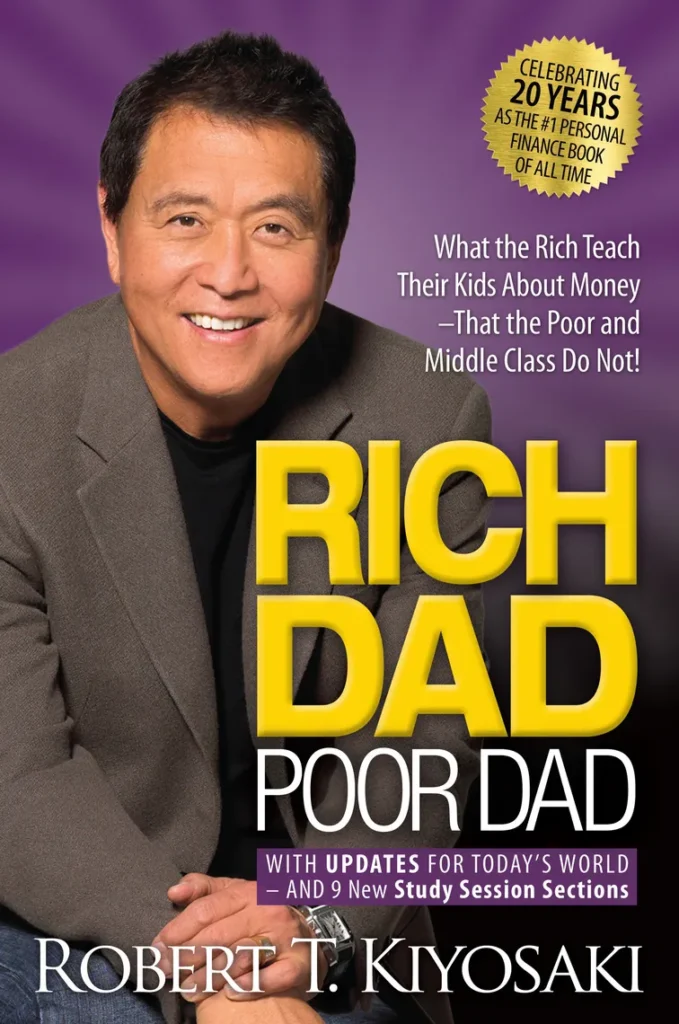
Rich Dad Poor Dad by Robert T. Kiyosaki is a personal finance classic that challenges traditional ideas about money, education, and wealth-building. Through the lens of Kiyosaki’s two “dads”—his real father (the Poor Dad) and the father of his best friend (the Rich Dad)—the book offers a stark comparison of two different financial mindsets.
The Rich Dad Mindset:
Kiyosaki’s Rich Dad teaches him the value of financial education, risk-taking, and investing in assets that generate passive income. He believes that true wealth comes from acquiring and building income-generating assets such as businesses, real estate, and investments, rather than relying solely on a salary.
The Poor Dad Mindset:
In contrast, Kiyosaki’s Poor Dad, a highly educated man, follows the traditional path of working hard, securing a stable job, and relying on a paycheck. His focus on job security and avoiding financial risks ultimately leads to a life of financial struggle.
Key Lessons:
- The Importance of Financial Education: Kiyosaki argues that schools teach students to work for money but fail to educate them on how to make money work for them. Financial literacy—understanding how money, investing, and the economy work—is crucial for achieving financial independence.
- Assets vs. Liabilities: One of the book’s central teachings is the difference between assets and liabilities. An asset puts money in your pocket, while a liability takes money out. Kiyosaki emphasizes the importance of acquiring assets and minimizing liabilities to build wealth.
- The Rat Race: The author discusses the concept of the “rat race,” where people work endlessly to pay bills, taxes, and debts, with little to no wealth accumulation. The key to escaping this cycle is to shift from being an employee to becoming an investor or business owner.
Why It Resonates:
Rich Dad Poor Dad resonates with readers because it breaks down complex financial concepts into simple, relatable stories. Kiyosaki’s lessons challenge conventional wisdom, encouraging readers to think differently about money, careers, and wealth creation. For many, this book is a wake-up call to take control of their financial future, pursue entrepreneurship, and start investing early.
Criticisms:
While the book offers valuable insights, it has been criticized for oversimplifying complex financial issues and lacking actionable details. Some readers also argue that Kiyosaki’s focus on entrepreneurship and real estate investment may not apply to everyone. However, the overarching message about financial literacy and the importance of assets remains powerful and relevant.
Conclusion:
Rich Dad Poor Dad is a must-read for anyone looking to shift their mindset from working for money to making money work for them. Whether you’re a beginner in personal finance or an experienced investor, the book provides timeless wisdom that can inspire you to take control of your financial destiny.