Book to Life Series | Investment | Personal Finance | Wealth Building | Financial Freedom
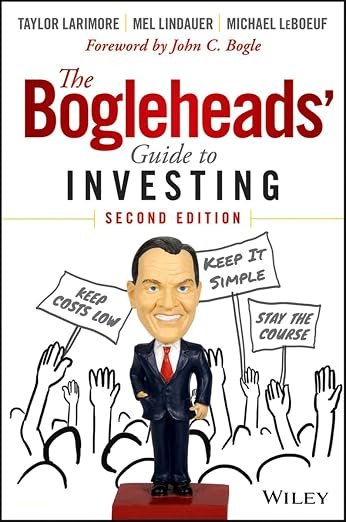
“Keep costs low. Keep it simple. Stay the course.”
Three short ideas. Yet they can completely change the way a person thinks about money.
For many investors, investing begins with excitement. They search for the next multibagger stock, follow market experts, compare mutual funds, watch financial news and constantly wonder whether they should buy or sell.
But long-term wealth creation often doesn’t require constant action.
It requires discipline, simplicity, patience and consistency.
That is the central message captured in the handwritten notes for The Bogleheads Guide to Investing. The notes emphasize keeping costs low, keeping investing simple, staying the course, investing regularly and allowing compounding to work over time.
The book’s philosophy is particularly useful for ordinary investors because it takes investing away from prediction and brings it back to something much more controllable:
Your behavior.
This Book to Life article explores the major ideas from the uploaded handwritten notes and turns them into practical lessons for anyone trying to build long-term wealth.
Important Note About the Book Attribution
“The Bogleheads Guide to Investing” by John C. Bogle.
For publication accuracy, the book The Bogleheads’ Guide to Investing is generally credited to Taylor Larimore, Mel Lindauer, and Michael LeBoeuf, while John C. Bogle is the founder of Vanguard and the central inspiration behind the Bogleheads investment philosophy.
This article follows the concepts and terminology contained in your handwritten notes, while using the standard book attribution where appropriate.
Why The Bogleheads Guide to Investing Matters
Imagine two people receive the same salary.
One earns well but spends almost everything. Whenever the market rises, they invest. Whenever the market falls, they become frightened and stop.
The other person isn’t particularly interested in predicting markets.
They save consistently.
They invest regularly.
They diversify.
They keep costs under control.
They use tax-advantaged accounts when appropriate.
They rebalance their portfolio.
And most importantly, they remain invested for decades.
Who has the better chance of achieving financial independence?
The second person may not look particularly impressive during a bull market.
But wealth creation is rarely about looking impressive.
It is about doing sensible things repeatedly for a long time.
repeatedly return to this idea: keep costs low, keep investing simple and stay the course.
The First Big Lesson: Start Early and Invest Regularly
One of the most powerful ideas in the notes is remarkably simple:
Start early. Invest regularly.
emphasize the power of compounding and describe compounding as a key to building wealth over time.
Think about two investors.
Investor A
Starts investing at 25.
Investor B
Starts at 40.
Even if Investor B invests larger amounts later, Investor A has something incredibly valuable:
time.
Compounding allows returns to generate additional returns.
Over long periods, this can become a powerful wealth-building force.
That is why delaying investing while waiting for the “perfect time” can be costly.
Compounding: The Quiet Wealth Creator
Compounding doesn’t feel exciting in the beginning.
You invest money.
Nothing dramatic happens.
You continue.
Another year passes.
You continue.
Another year.
Then another.
But over decades, the growth of the investment can become increasingly meaningful.
describe compounding as a key to building wealth and encourage investors to begin investing early.
This leads to a powerful personal-finance lesson:
You don’t need to become rich quickly. You need to give your money enough time to grow.
Keep Costs Low: The Lesson Many Investors Ignore
The second major lesson is about costs.
The notes emphasize:
- low costs
- avoiding unnecessary commissions
- minimizing fees
- being careful with investment expenses.
Why does this matter?
Because every rupee or dollar paid in unnecessary investment costs is money that cannot compound for you.
Imagine two investors receive similar gross returns.
Investor A keeps most of the return.
Investor B loses more of the return to fees, commissions and expenses.
Over a few months, the difference may seem insignificant.
Over several decades, it can become substantial.
That’s why cost control is not boring—it is a wealth-building strategy.
Keep Investing Simple
Another recurring idea in the notes is simplicity.
Investing can become unnecessarily complicated.
Investors may own:
- too many funds
- overlapping investments
- expensive products
- complicated strategies
- investments they don’t fully understand
Complexity can create confusion.
And confusion can lead to poor decisions.
The Bogleheads philosophy favors a straightforward approach based on broad diversification, appropriate asset allocation, low costs and discipline.
repeatedly emphasize keeping investing simple.
The question isn’t:
“How complicated can my portfolio become?”
It should be:
“Can I understand my portfolio and stick with it?”
Diversification: Don’t Depend on One Investment
The handwritten notes dedicate significant attention to diversification and asset allocation.
Imagine someone puts almost all their wealth into one company’s stock.
If that company succeeds spectacularly, the investor may become wealthy.
But if the company struggles, the consequences can be severe.
Diversification spreads exposure across investments.
Instead of betting everything on one winner, you participate in the broader market.
This doesn’t eliminate risk.
It manages concentration risk.
Asset Allocation: Build the Portfolio Before Picking Investments
One of the most useful concepts in the notes is asset allocation.
discuss asset allocation, risk tolerance, bonds, stocks, international diversification and portfolio construction.
Asset allocation essentially asks:
How should your portfolio be divided among different asset classes?
The appropriate answer depends on:
- age
- goals
- time horizon
- financial circumstances
- risk tolerance
- need for income
- ability to tolerate market volatility
There is no single allocation that is perfect for everyone.
Stocks and Bonds Have Different Jobs
distinguish between stocks and bonds and discuss the role of bonds in a portfolio.
Stocks generally provide greater growth potential but can experience significant fluctuations.
Bonds can provide different risk and income characteristics and may help reduce portfolio volatility depending on the investor’s allocation.
The important lesson is not that one is always better.
It is that different assets can serve different purposes.
Rebalancing: Don’t Let Your Portfolio Drift Forever
Suppose an investor begins with a particular asset allocation.
Over time, one part of the portfolio performs much better than another.
The original allocation changes.
Now the portfolio may carry more risk than the investor intended.
This is where rebalancing becomes useful.
The handwritten notes discuss asset allocation, portfolio rebalancing and maintaining the intended allocation.
Rebalancing is essentially a way of bringing the portfolio back toward its chosen structure.
It is not about predicting which asset will rise next.
It is about maintaining discipline.
The Most Difficult Part: Staying the Course
Imagine the stock market falls sharply.
Your portfolio is down.
News headlines are frightening.
Friends are talking about selling.
Social media is filled with predictions.
What do you do?
This is where the philosophy becomes difficult.
The notes emphasize staying the course and avoiding emotional reactions to market movements.
Staying invested during difficult periods requires psychological strength.
You don’t need to enjoy market declines.
You need to understand that volatility is part of investing.
Daniel’s Investment Mistake: Trying to Predict the Future
Consider Daniel, a fictional investor.
Daniel watches the market every day.
When stocks rise, he becomes optimistic.
When stocks fall, he becomes nervous.
One month he believes technology stocks will dominate.
The next month he thinks the market is about to crash.
His biggest problem isn’t his intelligence.
It is that he believes he must predict the future.
Eventually, Daniel discovers the Bogleheads philosophy.
He begins asking a different question:
“What can I control?”
He realizes he can control:
- how much he saves
- how regularly he invests
- investment costs
- diversification
- asset allocation
- taxes
- his behavior
But he cannot control:
- tomorrow’s stock price
- next year’s market return
- the next recession
- political events
- investor sentiment
That realization gives him peace.
Tax Efficiency: Keep More of What You Earn
also emphasize taxes and tax-efficient investing.
This is an important part of investing because investment returns are not always equal to the amount an investor ultimately keeps.
Taxes can affect:
- dividends
- interest
- capital gains
- withdrawals
- different investment accounts
The notes also discuss tax-advantaged accounts and the importance of understanding how taxation affects investment outcomes.
The practical lesson is straightforward:
Don’t ignore taxes when designing a long-term investment strategy.
For an individual investor, appropriate tax planning can make a meaningful difference over time.
Retirement Accounts: Use the Tools Available to You
accounts such as 401(k), IRA and other retirement-oriented investment structures.
These accounts can play an important role in long-term wealth building.
The exact rules vary by country and individual circumstances, so investors should understand the specific tax treatment applicable to them.
For Indian readers, the equivalent lesson is:
Understand the tax-efficient investment and retirement options available in your own financial system.
Don’t simply copy an American investment account structure.
Copy the principle:
Use available tax-efficient tools intelligently.
How Much Should You Save?
ask a very practical question:
How much do you need to save?
There is no universal number.
Your required savings rate depends on:
- income
- lifestyle
- age
- retirement goals
- expected investment returns
- future expenses
- desired financial independence
But there is a broader lesson:
Saving is the fuel that gives investing something to work with.
You cannot build an investment portfolio without capital.
Lifestyle Inflation: The Silent Enemy of Wealth
Imagine someone receives a salary increase.
Instead of increasing investments, they upgrade:
- their car
- their home
- vacations
- gadgets
- restaurants
- subscriptions
Their income rises.
Their lifestyle rises.
Their savings don’t.
This is lifestyle inflation.
keeping fixed living expenses as low as reasonably possible and creating ways to increase income when needed.
The goal isn’t to live miserably.
It is to make sure every increase in income doesn’t automatically become an increase in spending.
Real-Life Example 1: John Bogle and the Power of Low-Cost Investing
John C. Bogle is central to the philosophy behind the Bogleheads movement.
His investment philosophy emphasized simplicity, broad diversification and low costs.
The handwritten notes also repeatedly highlight low-cost investing and simplicity.
The lesson ordinary investors can take from Bogle is not:
“Copy every investment decision he made.”
Instead:
“Understand the structural advantages of keeping investing simple and costs low.”
An investor who avoids unnecessary complexity can spend less energy trying to predict markets and more energy following a disciplined long-term plan.
Real-Life Example 2: The Ordinary Monthly Investor
Consider another example.
A fictional employee named Priya begins investing a fixed amount every month.
She doesn’t attempt to identify the perfect market entry point.
When markets rise, she continues.
When markets fall, she continues.
When headlines become frightening, she follows her predetermined strategy.
Her greatest advantage isn’t superior intelligence.
It is consistency.
Over many years, regular contributions combined with long-term compounding can create a meaningful investment corpus.
This is the kind of ordinary behavior that the Bogleheads philosophy seeks to encourage.
Don’t Try to Beat the Market Every Day
Many investors make investing unnecessarily difficult.
They ask:
Which stock will outperform?
Which sector will win?
Should I buy today or tomorrow?
Will the market crash?
The Bogleheads philosophy encourages a different approach.
Instead of trying to constantly outsmart the market, focus on building a diversified portfolio and staying disciplined.
index investing, low costs and avoiding unnecessary activity.
The idea is powerful:
You don’t have to win every decision to build wealth.
You need a process you can follow for decades.
The Psychology of Investing: Your Behavior Matters
Investors may experience:
Fear
Selling after markets have already fallen.
Greed
Buying after prices have already risen dramatically.
Herd behavior
Buying something simply because everyone else is buying it.
Loss aversion
Feeling losses more strongly than gains.
Overconfidence
Believing recent success proves superior investment skill.
Understanding these tendencies can help investors create rules that protect them from themselves.
Daniel’s Second Breakthrough: He Stops Checking His Portfolio Every Day
One morning Daniel checks his portfolio.
It is down.
He feels the familiar anxiety.
But instead of selling, he looks at his investment plan.
His goals haven’t changed.
His time horizon hasn’t changed.
His asset allocation hasn’t fundamentally changed.
So he closes the app.
That small decision is a major breakthrough.
Daniel realizes:
A successful investor doesn’t need to react to every market movement.
Sometimes doing nothing is actually an active decision to remain disciplined.
The Bogleheads Action Plan: 10 Steps for Your Financial Life
Now let’s convert the philosophy into a practical framework.
Step 1: Start Investing Early
Don’t wait for perfect conditions.
Time is one of the most valuable assets in investing.
Step 2: Invest Regularly
Create a system that makes investing automatic or habitual where practical.
The notes emphasize regular investing and the power of compounding.
Step 3: Keep Costs Low
Review:
- expense ratios
- commissions
- advisory fees
- transaction costs
- unnecessary charges
Step 4: Diversify
Don’t let one company, sector or asset determine your financial future.
Step 5: Create an Appropriate Asset Allocation
Choose an allocation based on your own goals and risk tolerance.
Step 6: Use Tax-Efficient Strategies
Understand the tax implications of your investments and accounts.
The notes dedicate considerable attention to taxation and tax efficiency.
Step 7: Rebalance Periodically
Don’t allow market movements to completely change your intended risk profile.
Step 8: Avoid Market Timing
You don’t need to predict every market move.
Step 9: Control Your Behavior
Create rules before markets become emotional.
Step 10: Stay the Course
Perhaps the most important lesson:
Don’t abandon a sensible long-term strategy because of short-term noise.
10 Powerful Takeaways From The Bogleheads Guide to Investing
1. Start early.
Time gives compounding an opportunity to work.
2. Invest regularly.
Consistency can be more valuable than trying to find perfect entry points.
3. Keep costs low.
Every unnecessary cost reduces the money available for compounding.
4. Keep investing simple.
Complexity doesn’t automatically create better returns.
5. Diversify.
Don’t put your financial future in one investment.
6. Choose an appropriate asset allocation.
Your portfolio should match your goals and risk tolerance.
7. Understand taxes.
Tax efficiency can affect the wealth you ultimately retain.
8. Control your emotions.
Fear and greed can destroy otherwise sensible investment plans.
9. Rebalance when appropriate.
Maintain your intended portfolio structure rather than chasing recent winners.
10. Stay the course.
Long-term investing requires patience.
These ten themes closely reflect the uploaded handwritten notes, which cover compounding, regular investing, low costs, diversification, asset allocation, taxes, rebalancing, index investing, behavioral economics and staying invested.
The Bigger Lesson: Wealth Is Built More by Behavior Than Intelligence
Perhaps the most beautiful lesson from the Bogleheads philosophy is that you don’t have to be a financial genius.
You don’t have to predict every market crash.
You don’t need to discover every winning stock.
You don’t need to spend your entire day studying financial news.
Instead, you can focus on a handful of controllable behaviors.
Save.
Invest.
Diversify.
Keep costs low.
Manage taxes.
Rebalance.
Avoid emotional decisions.
Stay invested.
Then repeat.
Again.
And again.
And again.
For years.
Book to Life: Turning a Book Into a Financial Habit
This is where the Book to Life concept becomes powerful.
Reading a financial book is easy.
Changing your financial behavior is harder.
You can highlight every page and still make the same mistakes.
The real transformation happens when an idea becomes a habit.
You read:
“Keep costs low.”
Then you review your investments.
You read:
“Invest regularly.”
Then you automate your contribution.
You read:
“Stay the course.”
Then the next market decline arrives—and you don’t panic.
That’s when the book has moved from your bookshelf into your life.
Final Thoughts: The Boring Investor May Be the Successful Investor
There is something almost uncomfortable about the Bogleheads approach.
It isn’t glamorous.
There is no secret stock.
No magic formula.
No guaranteed shortcut.
Instead, it says:
Keep it simple.
Keep costs low.
Diversify.
Invest regularly.
Control taxes where appropriate.
Manage your behavior.
Stay the course.
The handwritten notes capture this philosophy beautifully in their opening message: keep costs low, keep it simple and stay the course.
And perhaps that is the greatest investment lesson of all.
You don’t need to make investing exciting.
You need to make it sustainable.
Because wealth is rarely created by one brilliant decision.
It is more often created by thousands of ordinary decisions made consistently over a very long period.
So don’t ask yourself:
“How can I become a brilliant investor?”
Ask:
“How can I become a disciplined investor?”
That question may change your financial future.
Inspired by The Bogleheads Guide to Investing? Start Your Own Book to Life Journey
If this book teaches us anything, it is that financial freedom doesn’t have to begin with a huge amount of money.
It can begin with one decision.
Start.
Start saving.
Start investing.
Start learning.
Start controlling costs.
Start understanding your risk.
Start building a diversified portfolio.
And most importantly, start building the behavior that can support your financial goals for decades.
Explore the original book, revisit the lessons that resonate with you, and choose one idea to put into practice today.
Because a book can give you knowledge.
But only action can turn knowledge into your life.
Disclaimer
This blog is an educational summary and interpretation of the ideas captured .It is not personalized investment, financial, tax or legal advice. Investment decisions should be made after considering your own financial goals, risk tolerance, time horizon and circumstances.