Overview – Why This Book Matters
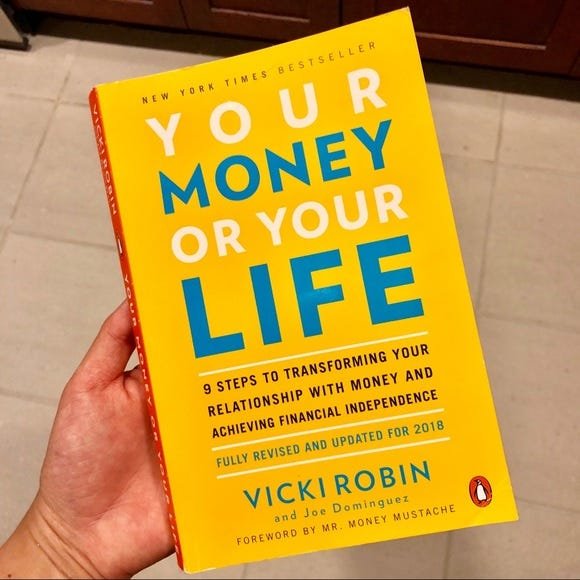
If you’ve ever wondered why you work so hard yet never feel financially secure, Your Money or Your Life by Vicki Robin is a game-changer. This isn’t just a budgeting book—it’s a mindset shift. It teaches you to see money as life energy, understand your relationship with spending, and build a path toward financial independence where passive income exceeds monthly expenses—what the authors call the Crossover Point.
This book is for you if:
You feel trapped in your job.
You want to stop worrying about bills.
You dream of having the freedom to choose how to spend your time.
The 9 Steps to Transform Your Relationship with Money
Step 1: Understand Your Old Money Habits
The first step is awareness—knowing how much you earn, your net worth, and your earning capacity.
Real-life example:
Ramesh from Pune always thought he was “okay” with money. When he calculated his net worth—assets minus liabilities—he found it was only ₹1,20,000 despite working for 12 years. By tracking his skills and opportunities, he realized he could freelance on weekends and increase his earning potential by ₹15,000/month.
📊 Formula:
Net Worth = (Savings + Assets) – (Loans + Liabilities)
Step 2: Redefine What Money Really Is
Money represents your life energy—the time and effort you exchange to earn it.
Example:
If your monthly salary is ₹60,000 but you spend 60 hours/week working and commuting, your true hourly wage might be closer to ₹200/hour—not ₹375/hour—because of hidden time costs.
Step 3: Monthly Tabulation of Income and Expenses
Track every rupee you earn and spend. Use a spreadsheet or a notebook.
| Month | Income (₹) | Expenses (₹) | Savings (₹) |
|---|---|---|---|
| Jan | 60,000 | 45,000 | 15,000 |
| Feb | 62,000 | 43,000 | 19,000 |
Example:
Priya tracked her expenses and discovered she was spending ₹3,000/month on unused subscriptions—money she redirected into a SIP.
Step 4: Ask the 3 Magic Questions About Expenses
For every expense, ask:
Did I receive satisfaction equal to the cost?
Would this expense improve my life long-term?
If I didn’t have to earn money, would I still spend on it?
Example:
After applying this, Manoj cut down his daily café visits from ₹150/day to twice a week—saving ₹3,000/month without feeling deprived.
Step 5: Make a Graph of Your Income and Expenses
Visualizing helps you see trends. Keep increasing income and reducing unnecessary expenses.
📊 Over time, your passive income line should cross your expenses line—the Crossover Point.
Step 6: Revisit and Reduce Expenses Again
Minimalism is not about deprivation—it’s about spending only on what truly matters.
Example:
Neha sold her second car, which was costing ₹8,000/month in EMI and maintenance, and invested that amount into mutual funds—bringing her crossover point closer.
Step 7: Think About Your Work
Work should align with your life goals. Don’t sacrifice your health and relationships for a paycheck.
Example:
Amit shifted from a high-stress corporate job (₹18 lakh/year) to a ₹14 lakh/year remote job. The reduced commute saved him 2 hours/day, which he used to build a side business earning ₹5,000/month.
Step 8: Save and Invest for Passive Income
Invest for the long term:
Govt Bonds – Low risk, fixed interest.
Mutual Funds – SIPs in equity for growth.
Stocks – Higher risk, higher potential.
Example:
Raj’s expenses were ₹40,000/month. His investments in debt funds, FDs, and dividend stocks brought him ₹42,000/month—achieving financial independence.
Step 9: Learn Investment Basics
Don’t just save—grow your money. Understand risk-reward: More risk, more gain.
| Asset Class | Risk Level | Avg Return p.a. |
|---|---|---|
| Govt Bonds | Low | 6% |
| Debt Mutual Fund | Low-Med | 7-8% |
| Equity MF | High | 10-14% |
| Stocks | High | 12-20%+ |
Key Takeaways from the Book
Decide Your “Enough” – More money doesn’t always mean more happiness.
Compare Lifetime Income to Net Worth – If they’re out of balance, you need to save more.
Calculate True Hourly Wage – Factor in commute, overtime, and stress.
See Money as Life Energy – Spend consciously.
Visualize the Crossover Point – Passive income > Expenses = Freedom.
Action Plan – How You Can Start Today
Calculate your net worth.
Track every expense for 1 month.
Cut 10% of non-essential spending.
Start an SIP in a balanced mutual fund.
Create a passive income plan.
Lessons Learned
Financial independence is not just for the rich—it’s for anyone willing to control expenses and grow income.
The Crossover Point is your goalpost—it’s the day your money works harder than you do.
Your mindset about money is more important than your salary.
Call-to-Action
If you’re tired of the rat race, start your financial freedom journey today. Apply the 9 steps from Your Money or Your Life, track your progress, and watch how your relationship with money transforms.
💬 Ready to find your Crossover Point?
Contact MyCashFlow at 📞 +91-8850511869 for personalized financial planning.