
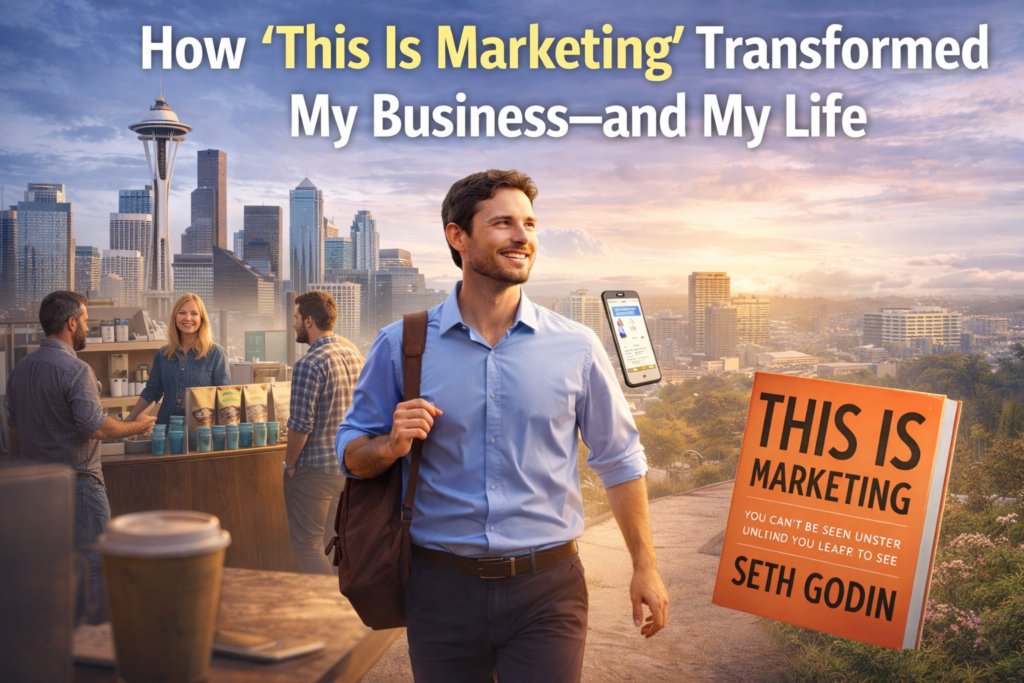
Before Daniel Found His Audience
It was a grey, drizzling morning in Seattle — the kind that blended seamlessly into every other morning Daniel Brooks could remember.
From the outside, Daniel’s life looked stable. At 39, he worked as a digital marketing consultant, had a modest apartment overlooking Lake Union, and a calendar full of client calls. But inside, he felt exhausted and invisible.
Daniel was busy all the time, yet nothing felt meaningful.
He ran ads. He optimized funnels. He posted content daily. Still, clients came and went. Projects felt transactional. Pricing was constantly negotiated downward. And worst of all, Daniel felt replaceable.
“Why does no one really care about what I do?” he wondered one evening while staring at campaign dashboards glowing on his laptop.
He believed the problem was scale.
“If I could just reach more people… go viral… get more impressions,” he told himself.
So he tried harder. Louder ads. More posts. Broader targeting.
The results?
More noise. Less connection.
Daniel wasn’t failing because he lacked skills.
He was failing because he didn’t understand marketing.
The Turning Point: Discovering This Is Marketing
The shift began quietly.
One weekend, while browsing a local bookstore in Capitol Hill, Daniel picked up a thin orange book with a deceptively simple title: This Is Marketing by Seth Godin.
He almost put it back.
Marketing books usually promised hacks, formulas, and shortcuts. He had tried them all.
But one line on the first few pages stopped him cold:
“Marketing is not about the stuff you make, but the stories you tell and the change you seek to create.”
Daniel bought the book.
That night, as rain tapped against the windows, he read until 2 a.m.
Each chapter felt uncomfortably personal.
Seth Godin wasn’t talking about ads.
He was talking about empathy.
Belonging.
Trust.
Daniel realized something painful:
He had been trying to sell to everyone.
And connecting with no one.
Implementation Phase: Applying This Is Marketing in Real Life
Daniel made a decision that scared him.
He would stop chasing attention.
And start earning trust.
Concept 1: Stop Marketing to Everyone—Start with the Smallest Viable Market
The first principle Daniel applied was one of the hardest:
Focus on the smallest viable audience.
Instead of marketing to “any business that needs digital marketing,” Daniel narrowed his focus to:
Independent coaches and consultants transitioning from corporate jobs.
He understood their fears.
He had lived them.
Suddenly, his messaging became clearer. Softer. More human.
Instead of shouting benefits, he spoke about identity:
“Who do you become when your business finally feels aligned?”
Concept 2: Marketing Is About Creating Change, Not Clicks
Daniel stopped measuring success by impressions and CTRs.
He started asking a deeper question:
“What change am I helping this person make?”
His content shifted from tips and tactics to stories:
Stories about fear of being seen
Stories about underpricing
Stories about building confidence through consistency
People started replying.
Not with emojis.
With paragraphs.
Concept 3: Permission Marketing Over Interruption
Daniel removed aggressive lead magnets and pop-ups.
Instead, he started a simple weekly newsletter:
“Quiet Marketing for Thoughtful Founders.”
No spam.
No hype.
Just insight.
Slowly, subscribers grew.
More importantly, trust grew.
People wanted to hear from him.
Concept 4: Price Is a Story
One of the most uncomfortable lessons came next.
Daniel realized his low pricing wasn’t generosity.
It was fear.
Fear of rejection.
Fear of being ignored.
So he raised his prices.
Not dramatically.
Intentionally.
His pricing now told a different story:
“This work matters.”
And something surprising happened.
The right clients stayed.
The wrong ones disappeared.
Concept 5: Show Up Consistently—Even When It’s Quiet
There were weeks when engagement was low.
No big wins.
No viral moments.
But Daniel remembered another lesson from This Is Marketing:
“Trust is built when you show up consistently, not when you shout occasionally.”
So he kept going.
The Breakthrough: When Belonging Replaced Broadcasting
Six months later, Daniel hosted a small online workshop.
He expected maybe ten attendees.
Thirty-seven people showed up.
Most of them had been reading his newsletter for months.
One sentence from a participant stayed with him:
“It feels like you’re talking to us, not at us.”
That was the crossover point.
Daniel wasn’t just marketing anymore.
He was leading a tribe.
Life After Change: A Different Kind of Success
Today, Daniel works fewer hours.
He earns more.
But more importantly, he feels aligned.
His business isn’t built on algorithms.
It’s built on trust.
He still lives in Seattle.
But the fog feels lighter now.
Reflection: Daniel’s Advice to You
“If I could go back,” Daniel says, “I’d stop trying to be louder and start trying to be clearer.”
Marketing isn’t about manipulation.
It’s about empathy.
And courage.
Call to Action: Start Your Book to Life Journey
Inspired by Daniel Brooks’ journey?
This is just one story in our Book to Life series, where powerful ideas become real-life transformations.
📘 Read This Is Marketing by Seth Godin. 🎯 Choose the smallest audience that matters. 💬 Tell a story they believe.
Take the first step toward your own transformation.
Disclaimer: This story is hypothetical and written solely to demonstrate how the concepts from This Is Marketing by Seth Godin can be applied in real life through storytelling