
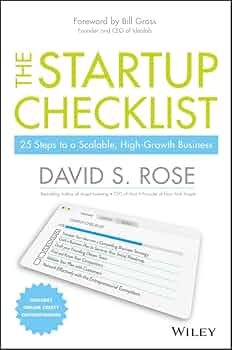
Why The Startup Checklist is a Must-Read for Every Entrepreneur
Starting a business feels exciting—until reality hits.
You have an idea. You have passion. But then come questions:
👉 How do I build a company from scratch?
👉 What steps should I follow?
👉 How do I avoid costly mistakes?
This is where “The Startup Checklist” by David Rose becomes a game-changer.
Unlike motivational books, this one is practical, structured, and brutally honest. It acts like a step-by-step roadmap—taking you from idea to exit strategy.
As highlighted in your notes , the book outlines “25 steps to a scalable, high-growth business”—making it one of the most actionable startup guides available.
🧠 Overview – Who Should Read This Book?
This book is perfect for:
- Aspiring entrepreneurs
- Startup founders
- Business owners scaling their venture
- Professionals entering startup ecosystem
- Anyone interested in self growth and development
David Rose, an angel investor, shares insights from funding hundreds of startups, making this book a real-world startup manual, not theory.
🔑 Key Concepts & Steps from The Startup Checklist
Let’s break down the most powerful principles from the book.
1. 💡 Turn Your Idea into a Business Model
“Ideas don’t build companies. Business models do.”
, the first step is:
👉 Translate your idea into a compelling business model
Key Elements:
- Customer Segments
- Value Proposition
- Revenue Streams
- Cost Structure
Practical Tip:
Use tools like Business Model Canvas to visualize your idea.
2. 🧭 Create a Lean Business Plan
Your notes mention:
👉 “Craft a lean business plan to serve as roadmap”
Forget 100-page plans.
Instead:
- Focus on clarity
- Define goals
- Map execution
Example:
A food startup doesn’t need a complex document.
It needs:
- Target audience
- Pricing strategy
- Distribution plan
3. 🔍 Analyze Competitors & Market
👉 Identify competitors and analyze strategy
What to Do:
- Study competitors’ pricing
- Analyze customer reviews
- Attend industry events
Real Insight:
Most startups fail not because of bad ideas—but because they ignore competition.
4. 👥 Build a Strong Founding Team
“Investors invest in people, not just ideas.”
Your notes highlight:
👉 “Draft your founding dream team”
Key Roles:
- Visionary
- Operator
- Technical expert
Real-Life Example #1:
A startup founder in Bangalore had a great SaaS idea but lacked execution skills.
He partnered with a tech co-founder.
👉 Result: Raised funding in 8 months.
5. 💰 Allocate Equity Smartly
From notes:
👉 “Allocate the equity in your startup”
Mistake to Avoid:
Giving equal shares without contribution clarity.
Best Practice:
- Equity = Value contribution
- Use vesting schedules
6. 🚀 Build an MVP (Minimum Viable Product)
👉 “Build a minimum viable product and validate with customers”
Why MVP Matters:
- Saves time
- Saves money
- Validates demand
Real-Life Example #2:
A Mumbai-based entrepreneur launched a fitness app MVP with basic features.
👉 Instead of building everything, he tested user behavior first
👉 After validation → scaled features
Result: 50,000 users in 1 year.
7. 🌐 Build Your Brand & Online Presence
From notes:
👉 “Establish your brand with a credible public profile”
Essentials:
- Website
- Social media presence
- Professional identity
Insight:
People trust brands they can find online.
8. 🤝 Network in the Startup Ecosystem
👉 “Network effectively within the entrepreneurial ecosystem”
Where to Network:
- Startup events
- Angel investor meetups
Truth:
Your network = Your net worth
9. ⚖️ Legal Setup & Compliance
From notes:
👉 “Lawyer up… incorporate your business properly”
Key Steps:
- Choose business structure (LLP, Pvt Ltd, etc.)
- Protect intellectual property
- Legal agreements
10. 📊 Measure What Matters (Data & Analytics)
From notes:
👉 “Measure your business with data analytics”
Tools:
- Google Analytics
- CRM tools
- Financial dashboards
Insight:
If you can’t measure it—you can’t improve it.
11. 💸 Understand Funding & Investors
From notes:
👉 “Understand funding process and what investors want”
Key Points:
- Investors look for scalability
- Strong team matters
- Clear business model
12. 🏁 Plan Your Exit Strategy
From notes:
👉 “Keep your eye on exit & long-term success”
Exit Options:
- Acquisition
- IPO
- Merger
🧭 Action Plan – How to Apply This Book in Real Life
Follow this practical roadmap:
Step 1: Validate Idea
Talk to 20 potential customers
Step 2: Build MVP
Launch fast → Improve later
Step 3: Create Team
Don’t do everything alone
Step 4: Start Marketing
Use social media + content
Step 5: Track Metrics
Focus on growth numbers
🎯 Step-by-Step Startup Guide (Simple Version)
- Idea → Business Model
- Business Plan → Execution
- Market Research
- Build Team
- MVP Launch
- Branding
- Networking
- Legal Setup
- Analytics
- Funding
📚 Lessons Learned from The Startup Checklist
- Execution matters more than ideas
- Start small, think big
- Data-driven decisions win
- Networking accelerates success
- Team is everything
🔥 10 Powerful Takeaways
- Startups require structure, not just passion
- Focus on scalable business models
- MVP is your best testing tool
- Build strong teams early
- Equity decisions matter
- Branding builds trust
- Networking opens doors
- Legal mistakes can destroy startups
- Measure everything
- Always plan your exit
🎯 Final Thoughts: From Idea to Impact
The Startup Checklist is not just a book.
It is a playbook for entrepreneurs.
It teaches you:
👉 How to think
👉 How to plan
👉 How to execute
If you are serious about building a startup, this book can save you years of mistakes.
🚀 Call to Action
If this blog gave you clarity, don’t stop here.
👉 Read The Startup Checklist by David Rose
👉 Start applying one concept today
👉 Build your dream business step by step
Your startup journey doesn’t need to be confusing—it just needs the right checklist.