
Book Summary & Lessons
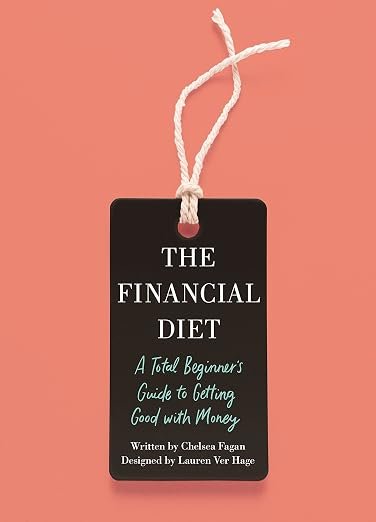
The Financial Diet by Chelsea Fagan: A Simple Guide to Changing Your Relationship With Money
There is a strange thing about money.
Almost everyone uses it.
Almost everyone needs it.
Almost everyone thinks about it.
Yet many people feel uncomfortable talking about it.
They may discuss careers, relationships, fitness, travel, business and even personal problems with their friends—but money can remain hidden behind a curtain.
How much do you earn?
How much do you save?
How much debt do you have?
Are you investing?
Can you actually afford your lifestyle?
For many people, these questions are uncomfortable.
That is exactly why The Financial Diet by Chelsea Fagan, with Lauren Ver Hage, is such an approachable personal-finance book. The publisher describes it as a beginner’s guide to getting good with money, covering budgeting, investing, credit, career, food, home and conversations about money.
But this isn’t simply a book about spreadsheets.
It is about behavior.
It is about the choices we make when nobody is watching.
It is about the latte, the restaurant bill, the credit-card purchase, the salary negotiation, the emergency fund and the investment account.
Most importantly, it asks us to stop treating financial improvement as something that begins someday.
It begins with what we do today.
Why The Financial Diet Matters
Imagine two people.
Both earn ₹80,000 a month.
Person A earns ₹80,000 and spends almost ₹78,000.
Person B earns ₹80,000 and spends ₹60,000 while deliberately saving and investing the rest.
After one month, the difference is only ₹18,000.
After several years, the difference can become enormous.
This is the heart of personal finance.
Income matters. But behavior determines what happens to that income.
The Financial Diet is aimed particularly at beginners who feel overwhelmed by budgeting, saving, investing and credit. Its core message is that becoming financially healthy doesn’t require becoming a financial expert overnight.
The book connects money with everyday life.
Your kitchen affects your grocery bill.
Your career affects your earning potential.
Your social life affects your spending.
Your home affects your budget.
Your relationships affect financial decisions.
Your habits affect your savings.
In other words:
Personal finance is not just about money. It is about how you live.
Lesson 1 — Stop Avoiding Your Bank Account
One of the simplest but most powerful lessons is also one many people resist:
Look at your numbers.
Fagan’s framework includes the idea of checking your bank balance regularly instead of avoiding financial reality.
Why?
Because avoiding your bank account doesn’t make financial problems disappear.
Imagine driving a car with the fuel gauge covered because you don’t want to know you’re running low.
The car doesn’t become more efficient.
You simply become less informed.
The same thing happens with money.
Practical Action
Start checking your financial position regularly.
Look at:
- Current bank balance
- Credit-card balance
- Monthly spending
- Savings
- Debt
- Investments
- Upcoming bills
Don’t judge yourself.
Just observe.
Awareness comes before improvement.
Lesson 2 — Create a Budget That Actually Fits Your Life
The word budget makes some people imagine restriction.
No restaurants.
No vacations.
No entertainment.
No fun.
But The Financial Diet presents budgeting as a practical tool for understanding and controlling spending. The publisher specifically highlights learning how to make—and stick to—a budget.
A budget is not supposed to punish you.
It is supposed to answer:
“Where should my money go?”
Instead of wondering where your salary disappeared at the end of the month, you decide beforehand where it should be allocated.
A Simple Starting Budget
Suppose your monthly income is ₹1,00,000.
You might create categories such as:
Essential expenses
- Housing
- Food
- Transportation
- Utilities
- Insurance
Financial priorities
- Emergency fund
- Debt repayment
- Investments
Lifestyle
- Entertainment
- Restaurants
- Travel
- Shopping
The exact percentages will differ from person to person.
The important thing is that your spending should reflect your priorities rather than happen accidentally.
Lesson 3 — The Four “Don’t You Dares”
One of the memorable frameworks associated with The Financial Diet is a set of non-negotiable money rules.
They are essentially guardrails designed to prevent common financial mistakes.
Don’t You Dare #1: Carry Credit-Card Spending You Can’t Afford
The book argues against spending on credit when you cannot repay it promptly.
Credit can be useful.
But credit is not income.
If you spend ₹10,000 today and have no realistic way to repay it, you haven’t made ₹10,000 appear.
You’ve borrowed it.
And interest can make the purchase more expensive.
Practical Lesson
Treat a credit card as a payment method—not as additional money.
Don’t You Dare #2: Fall Into the “CEO Lifestyle”
This is one of the book’s more interesting psychological ideas.
Sometimes our income increases, and suddenly our standards increase too.
We tell ourselves:
“I deserve this.”
And sometimes we do.
But if every increase in income immediately becomes an increase in lifestyle, we may never build financial strength.
The book warns against spending based on the lifestyle you imagine you should have rather than the lifestyle your actual financial position supports.
Practical Question
Before upgrading your lifestyle, ask:
“Will this purchase improve my life enough to justify the long-term financial cost?”
Don’t You Dare #3: Ignore Your Bank Account
Money becomes harder to manage when you refuse to look at it.
Regular financial check-ins create awareness.
You don’t need to spend an hour every day.
Even a short weekly review can reveal patterns.
Don’t You Dare #4: Wait for Savings to Magically Appear
Savings don’t magically happen.
If you spend everything that arrives, there will be nothing left.
The solution is to make saving intentional.
Practical Strategy
Automate an appropriate amount toward savings and investments after payday.
Then live on what remains.
Lesson 4 — Start Saving Before You Feel “Ready”
One of the biggest financial traps is waiting.
“I’ll start saving when I earn more.”
“I’ll invest after I clear everything.”
“I’ll build an emergency fund next year.”
“I’ll get serious about money when I get promoted.”
The problem?
There is always another reason to wait.
The Financial Diet emphasizes beginning to save rather than assuming your future self will magically solve the problem.
You don’t have to start with a huge amount.
Start with what your circumstances allow.
Then increase it as your income grows.
Lesson 5 — Build an Emergency Fund
Before focusing heavily on long-term investing, financial resilience matters.
The book’s beginner-oriented framework recommends building an emergency fund, with one summary describing at least three months of living expenses as a target.
Why?
Because life doesn’t follow your budget.
Your car can break.
Your job can change.
Your home can require an unexpected repair.
A family emergency can appear.
Without savings, an unexpected expense can turn into expensive debt.
Your Emergency Fund Is Not “Idle Money”
It is protection.
It buys time.
It gives you breathing room.
It can prevent a temporary problem from becoming a long-term financial setback.
Lesson 6 — Make Your Money Work for You
At some point, simply saving money isn’t enough.
You also need to understand investing.
One of the book’s core ideas is to begin learning how to make money work for you rather than relying exclusively on your labor income.
This can sound intimidating.
Many beginners imagine:
Wall Street.
Trading floors.
Complex charts.
Financial jargon.
But investing doesn’t have to mean constantly buying and selling individual stocks.
The important first step is education.
Learn about:
- Risk
- Diversification
- Asset allocation
- Fees
- Time horizon
- Compounding
- Retirement accounts
- Investment funds
Then develop an approach appropriate to your circumstances.
The goal isn’t to become a professional trader.
The goal is to become financially literate enough to make informed decisions.
Lesson 7 — Invest in Your Career, Not Just Your Portfolio
This is one of the most important ideas in the book.
Your career is also an investment.
The book encourages readers to think about getting paid what they deserve and investing in their career development.
Consider two employees.
Employee A
Never learns new skills.
Never negotiates.
Never builds a network.
Never asks for greater responsibility.
Employee B
Develops valuable skills.
Builds relationships.
Documents achievements.
Learns to negotiate.
Looks for better opportunities.
Over a decade, the difference in income can become significant.
That means personal development can have a direct financial impact.
Practical Action
Every year, ask:
- What skill can increase my value?
- What results have I created?
- Am I being paid fairly?
- What role could I grow into?
- Who should I build relationships with?
- What should I learn next?
Your income is one of your biggest financial assets.
Invest in it.
Lesson 8 — Learn to Cook Like an “Italian Grandmother”
One of the book’s charming ideas is that financial health extends into the kitchen.
Why?
Because food spending can quietly become a major expense.
Ordering food frequently may feel harmless.
One order isn’t necessarily a problem.
But repeated convenience spending adds up.
The book encourages learning to cook affordable, satisfying food rather than treating every meal as an opportunity to spend.
The idea isn’t to become miserable.
It’s to become capable.
Practical Strategy
Try:
- Cooking larger batches
- Planning meals
- Using ingredients already at home
- Reducing food waste
- Learning a few inexpensive recipes
- Limiting impulse delivery orders
Cooking can become both a money habit and a life skill.
Lesson 9 — Dream Medium Instead of Always Dreaming Bigger
Modern culture constantly tells us:
Dream bigger.
Buy the bigger house.
Drive the better car.
Travel more.
Build a million-dollar business.
Become extraordinary.
But Fagan introduces another interesting idea:
Dream medium.
The purpose isn’t to kill ambition.
It’s to make goals more realistic and less financially overwhelming.
Suppose you want to travel.
Instead of saying:
“I need to become rich before I can travel.”
create a medium-sized goal:
“I want to save ₹1,00,000 for a trip within 12 months.”
Now the dream has become actionable.
You can calculate:
₹1,00,000 ÷ 12 = about ₹8,333 per month.
The dream becomes a plan.
Lesson 10 — Talk About Money
Money becomes more powerful when it becomes less secretive.
The book addresses awkward conversations about money with friends and relationships. The publisher explicitly highlights learning how to talk about money with friends.
Imagine a group of friends.
One person can’t afford an expensive dinner.
But they are embarrassed to say so.
They go anyway.
Then they use a credit card.
The financial problem wasn’t the dinner.
It was the inability to communicate.
Healthy money conversations can include:
- Splitting expenses
- Discussing budgets
- Talking about salaries
- Planning shared goals
- Discussing debt
- Setting financial boundaries
Money should not become a source of shame.
It should become a subject you can discuss responsibly.
Real-Life Example #1 — Chelsea Fagan’s Own Financial Transformation
One of the strongest real-life examples connected to the book is Chelsea Fagan herself.
Before The Financial Diet became a major platform, Fagan has openly described struggling with money, including credit-card debt and not having a budget. In an interview, she explained that she eventually paid off her defaulted credit card, began saving, learned more about credit, and started using Mint to understand her finances. She then created The Financial Diet to document her journey.
That story matters because it reinforces one of the book’s central messages:
You don’t have to be naturally good with money to become better with money.
Financial literacy can be learned.
Habits can change.
Mistakes don’t have to become permanent.
Fagan’s journey moved from financial avoidance toward greater awareness and intentionality.
That transformation became the foundation for a platform—and eventually the book itself.
Real-Life Example #2 — Marisa Turned Debt Freedom Into a New Financial Plan
Another real-world example comes from Marisa Bell-Metereau, whose experience was published through The Financial Diet and later shared by M&T Bank.
After spending four years paying off debt, Marisa noticed that eliminating loan payments did not automatically solve her financial habits. She was still struggling at the end of pay periods.
Her solution was not simply to celebrate being debt-free.
She created new financial goals, including saving for travel and a future wedding, and found that giving her money specific purposes helped her get back on track.
This illustrates an important lesson:
Getting out of debt is not the end of financial planning.
It can be the beginning of the next phase.
Once debt payments disappear, the money needs a new job.
That might be:
- Emergency savings
- Investing
- Travel
- Education
- Home ownership
- Business capital
- Other meaningful goals
The Deeper Lesson — Financial Health Is About Your Whole Life
Perhaps the most interesting aspect of The Financial Diet is that it doesn’t treat money as an isolated subject.
The book connects financial decisions with:
Career
How much you earn matters.
Food
What you cook and buy matters.
Home
How you maintain your living environment matters.
Relationships
How you communicate about money matters.
Lifestyle
What you consider “normal” spending matters.
Personal Development
What skills you develop matters.
Investing
What you do with surplus money matters.
This makes the book different from a simple budgeting manual.
It’s closer to a life-management philosophy built around financial awareness.
A Practical 30-Day Financial Diet Challenge
If you want to turn the book’s ideas into action, try this four-week challenge.
Week 1 — Face Your Numbers
Day 1
Check every bank and credit-card balance.
Day 2
List all monthly income.
Day 3
List fixed expenses.
Day 4
List variable expenses.
Day 5
Calculate your current savings rate.
Day 6
Review subscriptions.
Day 7
Write down your top three financial goals.
Week 2 — Build Your Budget
Create categories for:
- Essentials
- Savings
- Debt
- Investments
- Lifestyle
- Fun
Don’t make the budget so restrictive that you immediately abandon it.
Make it realistic.
Week 3 — Reduce Financial Waste
Choose three areas to improve.
For example:
Food: Cook at home more frequently.
Shopping: Introduce a waiting period before non-essential purchases.
Subscriptions: Cancel services you don’t use.
Put the savings toward a financial priority.
Week 4 — Build the Future
Review:
- Emergency savings
- Debt repayment
- Retirement/investment contributions
- Career development
- Upcoming large expenses
Then automate what makes sense.
Your goal isn’t perfection.
Your goal is to create a system you can continue.
10 Biggest Takeaways From The Financial Diet by Chelsea Fagan
1. Look at your money regularly
Avoiding your finances doesn’t improve them.
2. Make a realistic budget
Your budget should reflect your actual life.
3. Don’t use credit as extra income
Borrowing can make today’s lifestyle more expensive tomorrow.
4. Avoid lifestyle inflation
A higher income doesn’t require every expense to increase.
5. Start saving now
Don’t wait for a perfect financial future.
6. Build an emergency fund
Financial resilience protects your long-term plan.
7. Learn about investing
You don’t need to become an expert overnight.
8. Invest in your career
Increasing your earning potential can be as important as cutting expenses.
9. Learn practical life skills
Cooking, maintaining your home and shopping intelligently can support financial health.
10. Talk about money
Financial conversations can help replace shame and confusion with knowledge and better decisions.
The Financial Diet Is Not About Spending Nothing
This may be the most important distinction.
A financial diet is not financial starvation.
The goal isn’t to eliminate every pleasure.
It’s to eliminate financial waste.
There is a huge difference.
You can still travel.
You can still eat at restaurants.
You can still buy clothes.
You can still enjoy your hobbies.
You can still celebrate.
The question is:
Are you spending intentionally, or are you spending automatically?
A good financial plan should make room for both your present and your future.
You should enjoy your life today without sacrificing your future unnecessarily.
That balance is where financial maturity begins.
Final Reflection — Your Money Story Can Change
Imagine waking up one morning and no longer feeling nervous when you open your banking app.
You know what you earn.
You know what you spend.
You know what you’re saving.
You know what you’re investing.
You understand your debt.
You have financial goals.
You are building skills.
You can talk about money without embarrassment.
You don’t need to be wealthy to experience that feeling.
You need clarity.
That’s the transformation The Financial Diet encourages.
Not:
“Become rich immediately.”
But:
“Become better with money.”
Then do it again tomorrow.
And the next day.
And the next month.
Because financial success is rarely one giant decision.
It is thousands of small decisions that eventually become your lifestyle.
Your Book-to-Life Action Plan
Don’t close this article and simply think:
“That was a good summary.”
Turn one idea into an action.
Today:
Check your bank balance.
This week:
Track every expense.
This month:
Build or improve your budget.
Next month:
Increase your savings rate if possible.
This year:
Learn about investing and improve your earning potential.
And remember:
You don’t need to become perfect with money.
You simply need to become more intentional with it.
Inspired by The Financial Diet? Start Your Own Transformation
This is what the Book to Life series is ultimately about.
Books can give us ideas.
But ideas become valuable when we apply them.
The Financial Diet by Chelsea Fagan gives beginners a practical framework for thinking differently about budgeting, saving, investing, career growth, food, lifestyle and relationships with money.
So read the original book.
Take notes.
Choose one principle.
Apply it.
Then choose another.
Your financial transformation doesn’t have to start with a six-figure salary.
It can start with looking at your bank account today.
It can start with cancelling one unnecessary expense.
It can start with cooking one more meal at home.
It can start with saving your first ₹1,000.
It can start with asking for a better salary.
It can start with learning what an investment fund actually is.
It can start with having an honest conversation about money.
The first step may look small.
But small steps repeated consistently can change the direction of an entire financial life.
Your money story is not finished.
You can rewrite the next chapter.
⚠️ Disclaimer
This article is a book summary and educational interpretation of The Financial Diet by Chelsea Fagan and is intended for general education and inspiration. It is not a substitute for personalized financial, investment, tax, legal, or professional advice. Investment products and financial rules vary by country and individual circumstances, so readers should do their own research and consult an appropriately qualified professional when necessary.