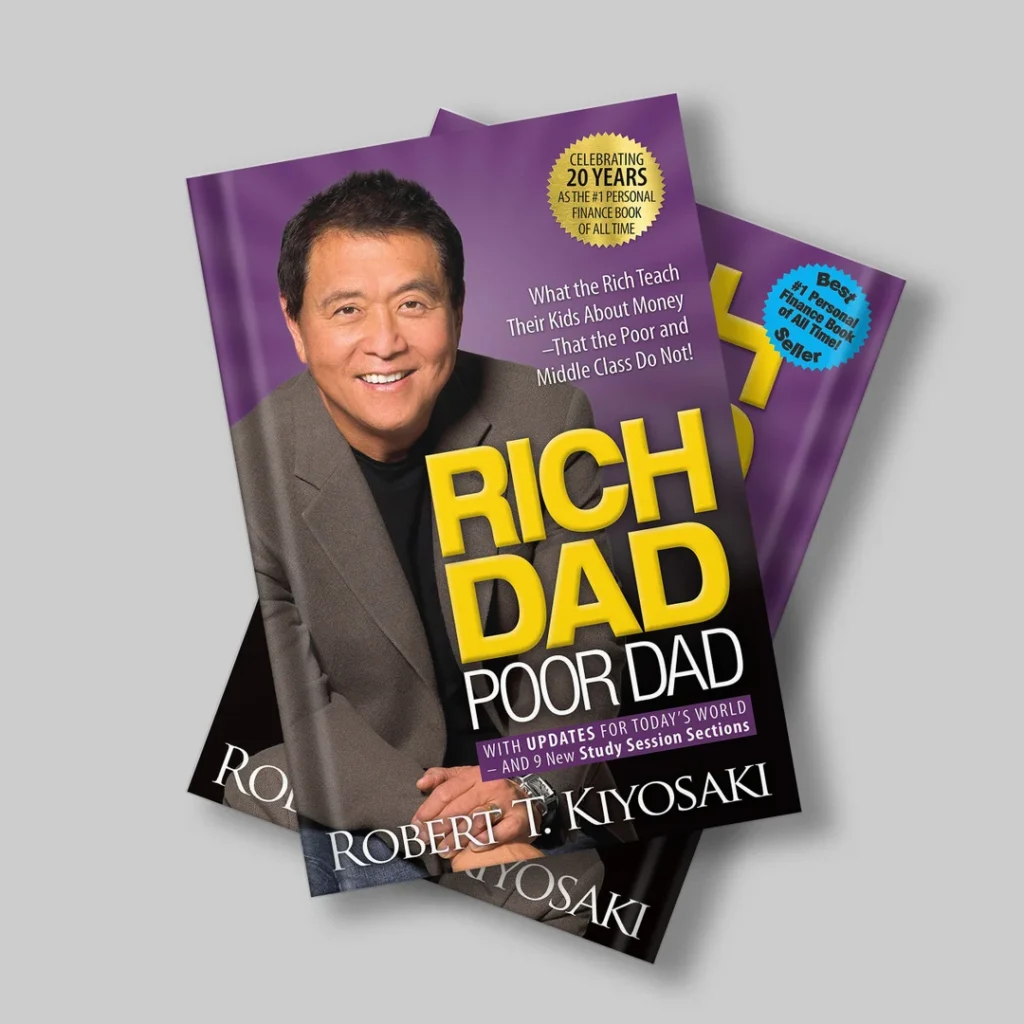
Rich Dad Poor Dad is more than just a book. It’s a mindset shift. Robert Kiyosaki, the author, didn’t just write about finance; he exposed the huge difference between how the rich and the middle class think about money.
This blog brings you the essence of the book chapter-by-chapter, along with real-life examples and practical lessons you can apply right now.
Chapter 1: Rich People Don’t Work for Money
Kiyosaki reveals how the rich teach their children to take risks and embrace discomfort for growth. While poor and middle-class families often tell their kids to “study hard and get a safe job,” rich parents teach them to look for opportunities and solve problems.
Real-Life Example: Elon Musk didn’t wait for a job; he created companies like Zip2, PayPal, and then Tesla. He took massive risks and created his own income engines.
Chapter 2: The Poor and Middle Class Work for Money; the Rich Make Money Work for Them
Middle-class people earn, spend, and repeat in a rat race. Rich people build income streams. They invest in things that generate income, such as real estate, stocks, or businesses.
Real-Life Example: A businessman buys an apartment, puts it on rent, and earns monthly passive income. Meanwhile, a middle-class person buys a car on EMI and keeps working just to pay off debt.
Chapter 3: Why Teach Financial Literacy
Knowing how to read a balance sheet is more important than a degree in many cases. The rich understand the difference between assets and liabilities.
Assets: Put money in your pocket (e.g., rental property)
Liabilities: Take money from your pocket (e.g., EMI on self-occupied home)
Real-Life Example: Ramesh took a home loan and now pays EMI + property tax + maintenance. His home is a liability. On the other hand, Suresh bought a small shop and rented it – it’s an asset.
Chapter 4: A Long-Term Strategy That Leads to Wealth
Don’t buy liabilities first. First, build assets and then enjoy luxuries. This is the secret of delayed gratification.
Real-Life Example: A software engineer invested in stocks and mutual funds from age 25. By 35, he had enough cash flow to buy his dream car without any loan.
Chapter 5: Mind Your Own Business
Don’t only work for someone else’s dream. Build your own business or side hustle.
Assets to build:
Stocks
Real estate
Mutual funds
Flip products
Start an online business
Real-Life Example: A woman started with blogging and affiliate marketing on books (just like GaneshBookMantra). Within a year, she was earning more than her job.
Chapter 6: The History of Taxes and Power of Corporations
Rich people use companies to manage their income and reduce tax.
Rich: Earn → Spend → Pay Tax
Middle Class: Earn → Pay Tax → Spend
Real-Life Example: A business owner deducts office expenses, travel, even phone bills before paying tax. A salaried person has little control.
Chapter 7: The Rich Invest Money
Rich people trust themselves, take educated risks, and constantly look for opportunities to invest.
Real-Life Example: Robert Kiyosaki invested in real estate when everyone was scared. That decision made him a multi-millionaire.
Chapter 8: Work to Learn, Not Just to Earn
The author took jobs not for money but for learning skills like sales, communication, finance, etc.
Real-Life Example: A young man worked in network marketing for 2 years and learned sales. Later, he built his own online store and became successful.
Chapter 9: Overcome Obstacles
Fear of losing money, laziness, and criticism stop most people. Rich people build habits, take action, and learn from failures.
Real-Life Example: A startup failed twice but learned from each setback. On the third try, they created a profitable e-learning platform.
Chapter 10: Getting Started
Success starts with desire, discipline, and action.
Keep your dreams strong.
Learn from books, mentors, and seminars.
Take calculated risks.
Be generous; give back to society.
Real-Life Example: Kiyosaki himself started with nothing but became wealthy by learning, applying, and sharing knowledge. He now inspires millions.
🔥 Five Powerful Takeaways:
Build assets first, then enjoy luxuries.
Don’t just work for money – make it work for you.
Learn financial literacy early.
Invest in yourself: education, skills, and mindset.
Build income-generating assets: business, rental, stocks.
🚀 Call to Action:
Are you ready to take control of your money and your future?
Start small, but start today.
📈 Follow @GaneshBookMantra for real stories and book-powered life lessons.
🌊 Explore how we help people apply book wisdom to build income: MYCASHFLOW
📄 Read more practical blogs: GaneshBookMantra.com